
Bulk
Discrete manufacturing

Discrete manufacturing software for teams still run on spreadsheets — production tracking, traceability and quality without an ERP replacement

Your floor, on one record

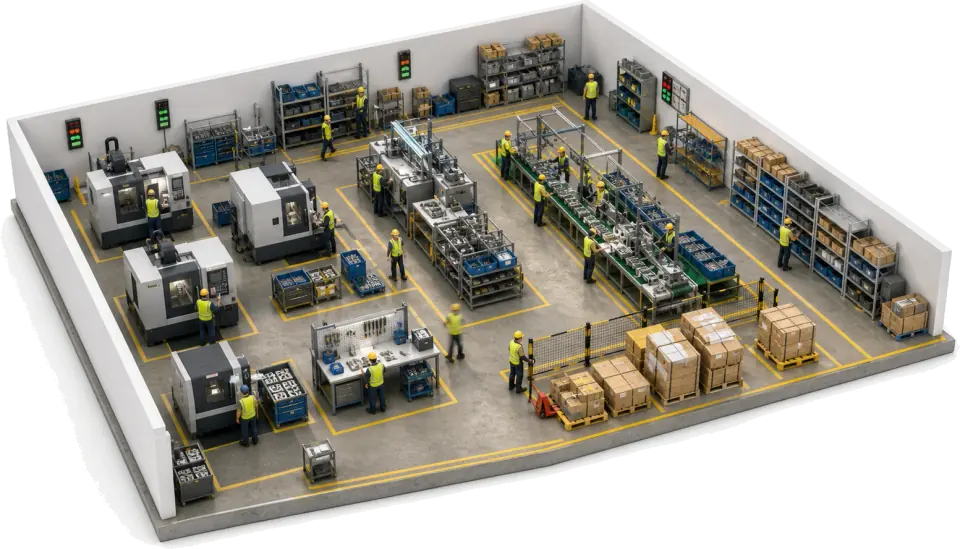
This is your floor. These are the modules on it.

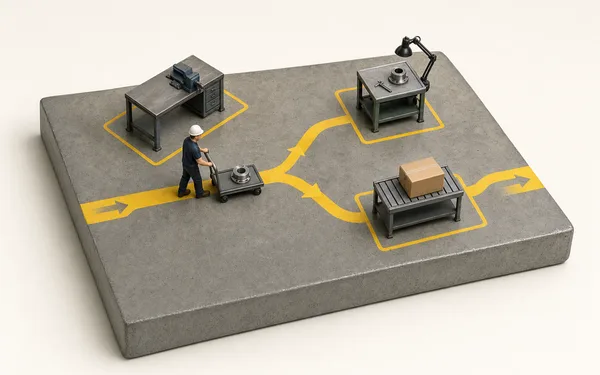
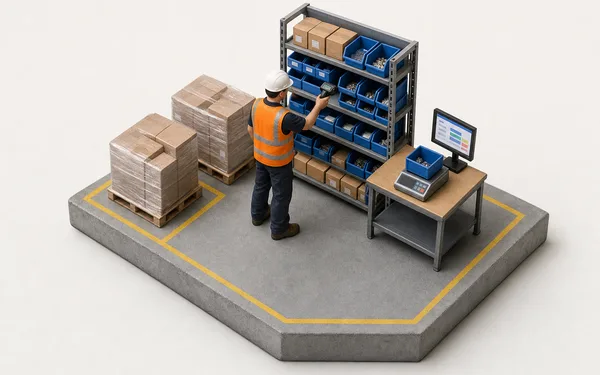
A discrete manufacturing floor, bird view — every pin is a Bulk module doing a real job on that spot of the floor. Click one to see the module.

Module AI agent Reporting Automation
On the floor

What holds up on a live floor.

Once every job runs on one live record, these are the outcomes you can point at — not a board-pack story.

90% Time to trace a finished assembly
99.3% First-time-right at release
0 Re-keys, desk to dispatch
100% Serial & lot genealogy held

Not an MES. Not an ERP. The layer your floor actually needs.

Most software aimed at a discrete manufacturer is either an MES that assumes an integrator, a PLC network and a six-figure project, or an ERP that wants your whole business re-platformed before the first job is booked. Bulk is the layer in between — the production tracking, genealogy and quality system for the shop floor, without the rip-and-replace.

Every job carries its own thread: the supplier lot booked at goods-in, each operation with the operator and machine that ran it, the inspection result, the NCR if it failed. When a customer calls about a suspect part, you trace a finished assembly back through every component lot, operation and operator in seconds — the recall-and-trace moment ERP add-ons make painful.

Bulk fits the same way across the discrete world. Machinists live on multi-op routes and FAIR packs (CNC machine shop software); fabricators and welders on weld maps and EN 1090 (metal fabrication software); moulders on resin-lot and cavity genealogy (injection moulding software); composites shops on prepreg out-life (composites manufacturing software); electronics lines on reel-lot and board-serial trace (PCB assembly software). Same engine underneath, configured to each route and its paperwork — this page is the floor in general, the sibling pages go deep on each.

How Bulk works on a discrete floor

From goods-in to genealogy, one thread.

Follow one assembly through the shop — every step lands on the same live record, so the trace and the audit trail are side effects of doing the work.

01

Book the material in

Goods-in captures the supplier lot, cert and delivery note against the job — chain of custody starts at the gate, not at the machine. OCR reads the paperwork so nobody re-types it.

Data thread →
02

Build to the route

Each operation stamps the operator, the machine and the time as the part moves down the route — mill, weld, mould or press — so the build history writes itself as the line runs.

Production →
03

Check and contain

Inspection results land once. A failure raises an NCR on the spot, holds the batch and escalates to 8D — no suspect part slips downstream while the paperwork catches up.

Quality →
04

Trace in seconds

A customer flags a serial. You pull the whole genealogy — every component lot, operation and operator — and instantly list every other part made from the same lot. The recall moment, in one query.

Data thread →
The reality on your floor

Experienced staff make fragile look easy.

A job moves from intake to dispatch through hands, spreadsheets and paper that work — until an audit, a recall or a retirement finds the cracks. These are the three that cost you most.

01

The same job, re-typed five times

A part number keyed into a PDF, a spreadsheet, the accounts system and a report — every handoff a fresh chance to fat-finger a digit on a job a customer is waiting for.

02

Trace takes days, not seconds

A customer asks which parts share a suspect lot. Answering means walking travellers, cross-referencing spreadsheets and phoning the operator who ran it — days of work to reconstruct what should already exist.

03

Knowledge in people's heads

The master data, the route quirks and the workarounds live with the person who has been there fifteen years. When they are off — or gone — the floor slows and the mistakes start.

Where Bulk earns its keep

The blocks that fit a job shop.

Every module ships from day one — these are the ones discrete manufacturers reach for first, wired to one auditable record. Arrange the blocks around how you already run.

One data thread

Booked at the desk, produced on the line, checked in QC, dispatched and invoiced — the same job with a full serial-and-lot genealogy, not six copies of it drifting apart.

Data thread →
Production tracking & OEE

Availability, performance and quality recalculated as the floor moves — on a desk monitor or a wall TV, no nightly export — so a lost hour shows up while you can still act on it.

OEE & analytics →
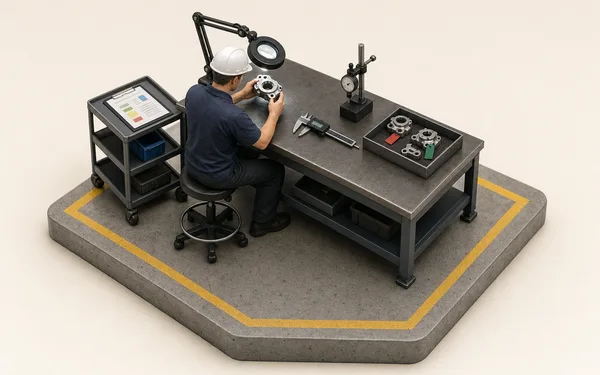
Quality, NCR & 8D

Raise a nonconformance where it happens, hold the batch, and drive containment through to root cause and 8D — the quality record stays attached to the part, not a separate binder.

Quality →
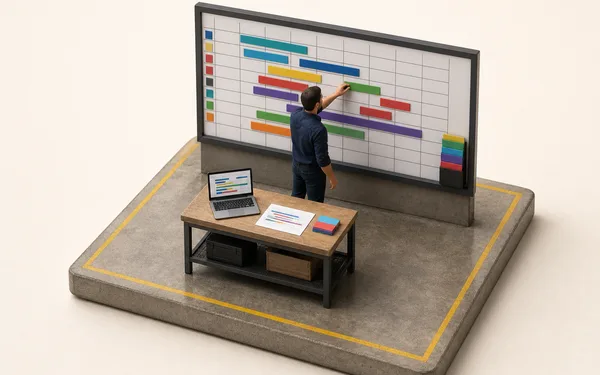
Scheduling & capacity

Plan the queue against machines, cells and people; see the backlog live and tell a customer a real date instead of a guess. Works the same for a machine shop or a moulding cell.

Scheduling →
Inventory & consumables

What is on the shelf, who took it and when to reorder — raw stock and consumables tracked against the job that used them, so a shortage is a warning, not a Monday surprise.

Inventory →
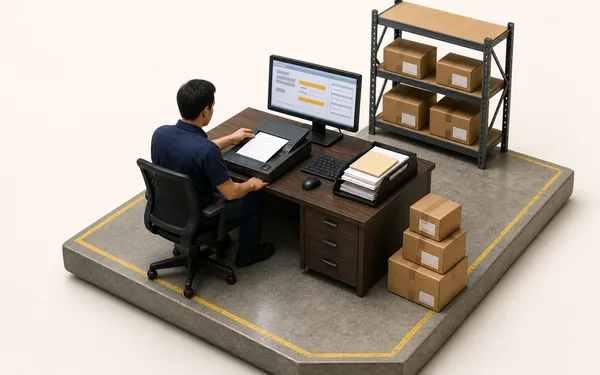
Documents & certs

Work instructions, drawings, material certs and dispatch paperwork drawn from the same record — the right revision in the operator's hands, the cert pack assembled without a hunt.

Documents →
Proof on the floor

Same parts. Fewer surprises.

Once the floor is on one live record, the trace a recall used to demand stops being a fire drill — and the gaps where jobs stalled between teams simply close.

90% Time to trace an assembly at Ferndale Engineering
99.3% First-time-right at final inspection
0 Re-keys between desk and dispatch
“A customer used to mean a two-day trawl through travellers to answer a lot query. Now it is one search — the whole genealogy, every part off that lot, on screen while they are still on the phone. We got a planner's week back and stopped dreading the audit.”
FE
Operations Director — Ferndale EngineeringDiscrete manufacturing — machined & fabricated assemblies
Straight answers

Questions, answered.

01

Is Bulk an MES or an ERP for discrete manufacturing?

Neither, on purpose. An MES assumes an integrator and a PLC network; an ERP wants your whole business re-platformed. Bulk is the traceability, production-tracking and quality layer for the shop floor — it captures genealogy, drives the route and holds the quality record, and sits alongside whatever accounts or ERP system you already run. Most shops our size are replacing spreadsheets and whiteboards, not systems.

02

Which kinds of discrete manufacturer is this built for?

The whole discrete world — machine shops, fabricators and welders, injection moulders, composites and PCB assembly, through to furniture and joinery makers, industrial machinery builders, building products factories and medical device manufacturers — plus the materials testing labs that check their work. It is the same engine underneath, configured to your route, your paperwork and your standard. Each sibling page goes deep on its vertical; this is the floor in general.

03

Can it trace a finished assembly back to component lots?

Yes — that is the point of the data thread. Every job carries the supplier lot booked at goods-in, each operation with its operator and machine, and the inspection results. Give it a serial and it walks the full genealogy in seconds, then lists every other part made from the same lot — the containment query a recall turns on.

04

Do we have to replace our ERP or accounts system?

No. Bulk runs the floor and its records; invoicing can draw from the same job data, but your accounts or ERP platform stays. This is the layer between the machines and the back office — not a rip-and-replace project, and not a big-bang cutover.

05

How long does rollout take?

One job type, end to end first — goods-in to dispatch, proven on real work in weeks — then the rest of your routes follow on the same pattern. You are an early-access customer, so you work directly with the build team and the configuration is shaped around your floor, not a template.

06

What does it cost for a shop like ours?

One per-site price with every module included — no per-module upsell, with hosting and rollout in the figure. Early-access shops work directly with the build team, so pricing and priorities are agreed openly rather than hidden behind a quote wall.

Let's run one job through.

Pick a part you make every week. We'll configure it end to end — goods-in to genealogy — and show you the trace assembling itself as the work happens.