
Furniture & joinery manufacturing software — production, quality and traceability in one place
This is your floor. These are the modules on it.
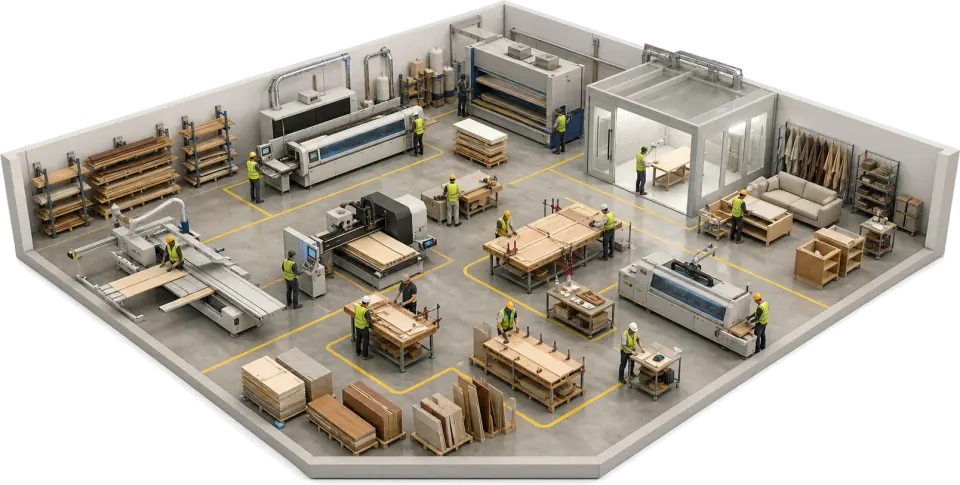
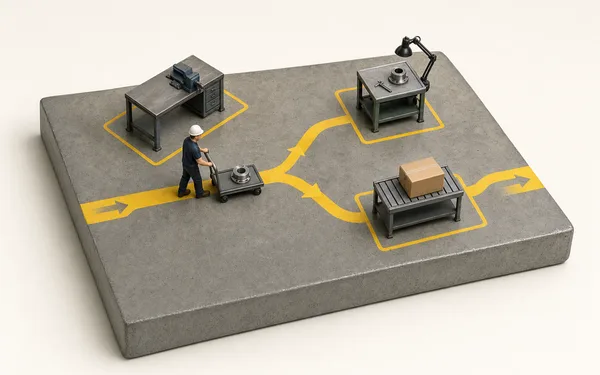
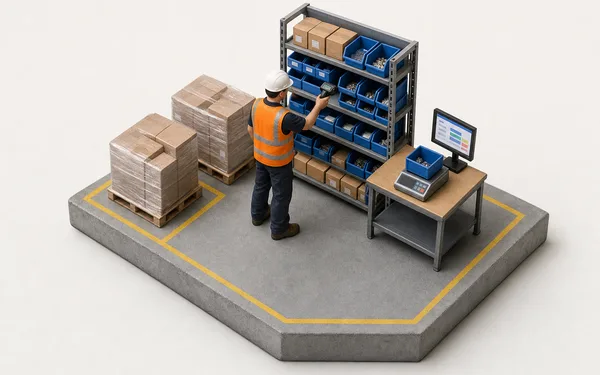
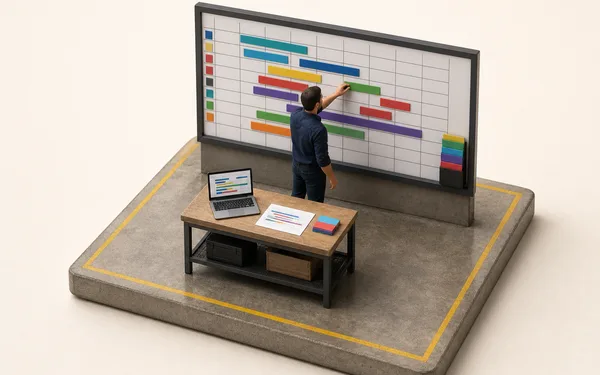
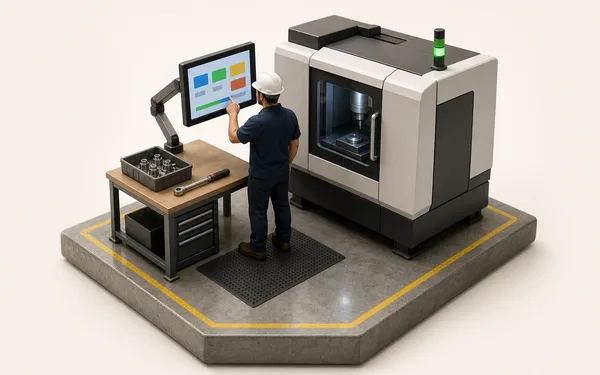
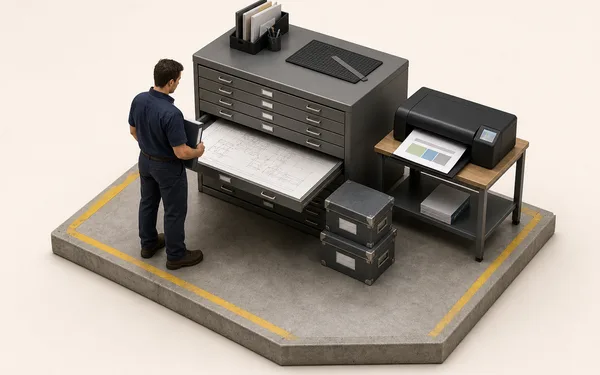
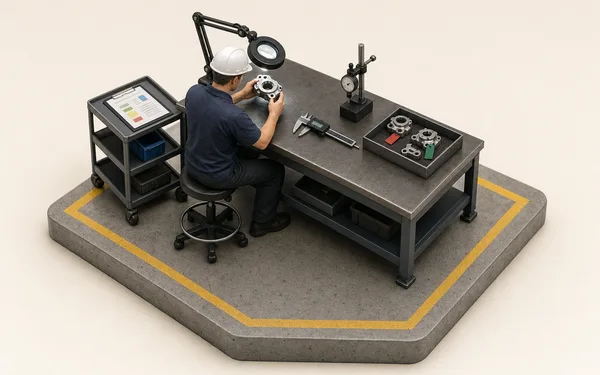
A furniture and joinery workshop, bird view — every pin is a Bulk module doing a real job on that spot of the floor, from the cutting bench to the finishing bay to dispatch. Click one to see the module.
What holds up on a live floor.
Once every job runs on one live record, these are the outcomes you can point at — not a board-pack story.
Not an estimator. Not an ERP. The layer your workshop actually needs.
Most software aimed at a furniture or joinery maker is either a cabinet estimator — quote and cut-optimise, then blind to everything that happens on the bench — or an ERP that wants the whole business re-platformed before the first board is cut. Bulk is the layer in between: the production, scheduling and traceability system for the workshop floor, without the rip-and-replace.
Every order, cutting list, board, fabric roll, foam batch, finish and dispatched piece lives on one record. So when a customer calls about a delivered suite — or a fire inspector asks which foam went into it — the answer is already there, not scattered across job bags, a whiteboard and someone's memory.
It is built around how a made-to-order shop actually runs: one-off commissions and repeat lines side by side, a finishing schedule that shifts daily, and the batch evidence UK upholstery rules demand — captured as work happens, not reconstructed after the fact.
From order to delivered suite, one thread.
Follow one made-to-order upholstered job through the shop — every step lands on the same live record, so the fire-safety trace and the customer's paperwork are side effects of building the piece.
Take the order, build the cutting list
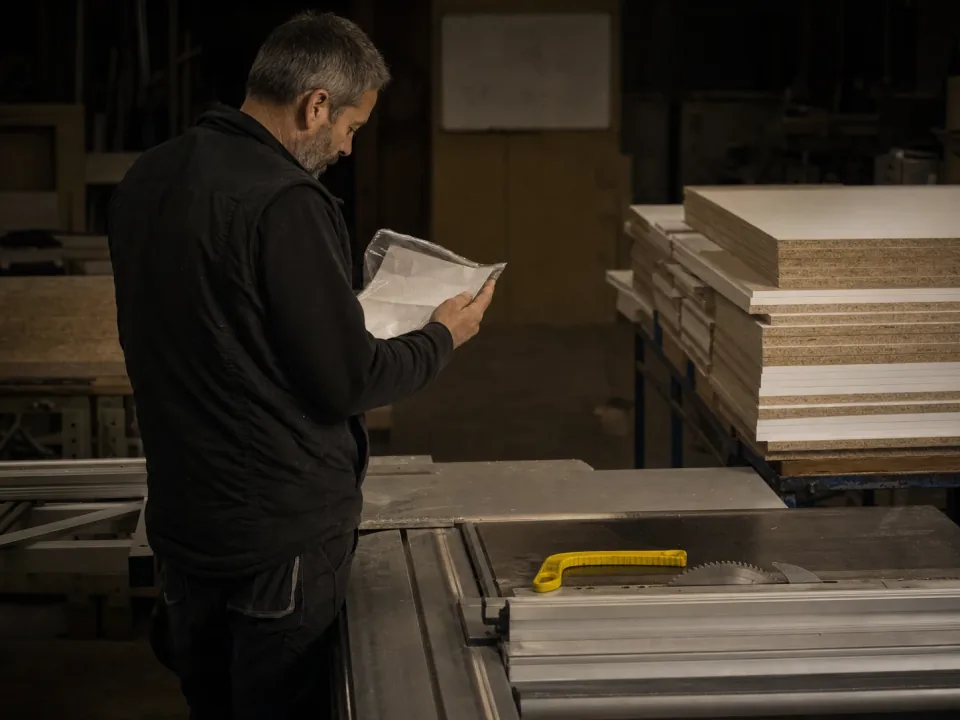
The commission comes in — sizes, frame, fabric, foam grade. Bulk turns it into a cutting list and a route across the benches, with the specification pinned to the job so nothing is read off a scrap of paper.
Routing →Draw the batches at the bench
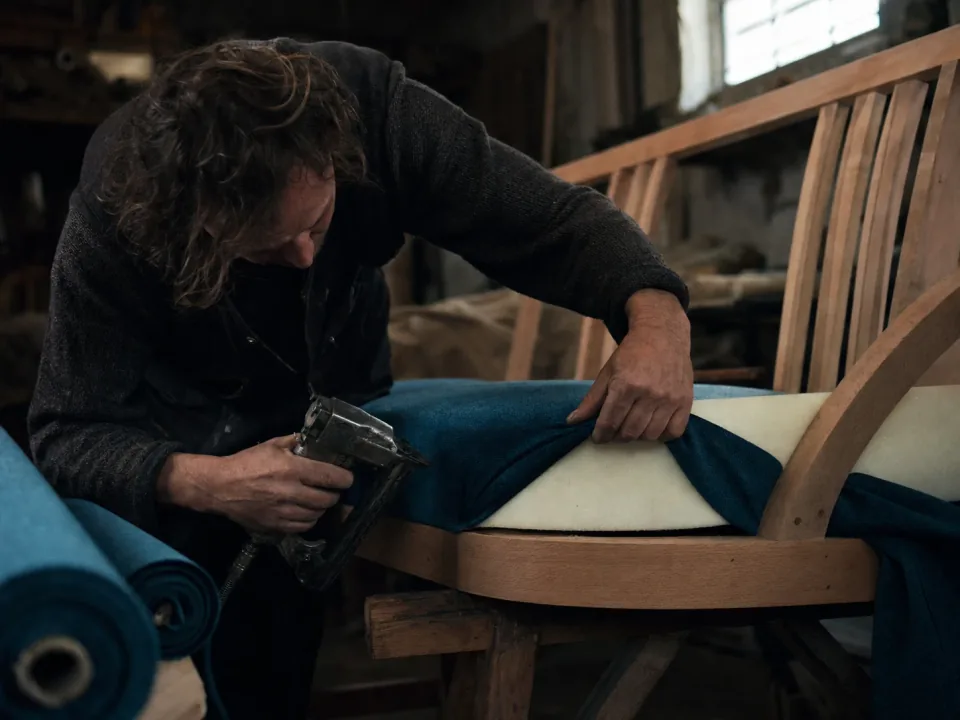
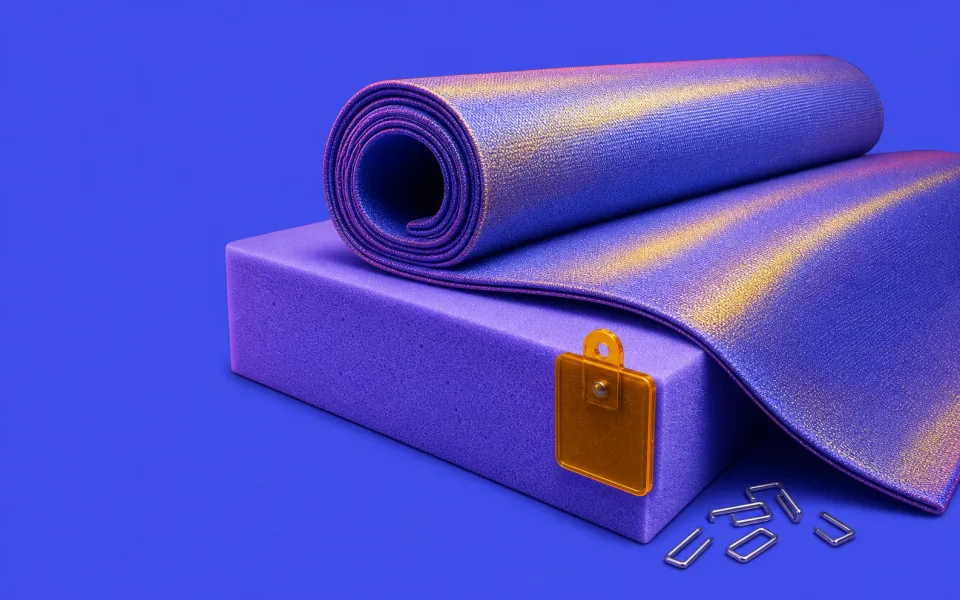
As the frame is built and the piece is upholstered, the operator logs the FR foam batch and the fabric roll against the job. Board and material come off stock the same moment — the record and the shelf stay in step.
Inventory →Book it through finishing
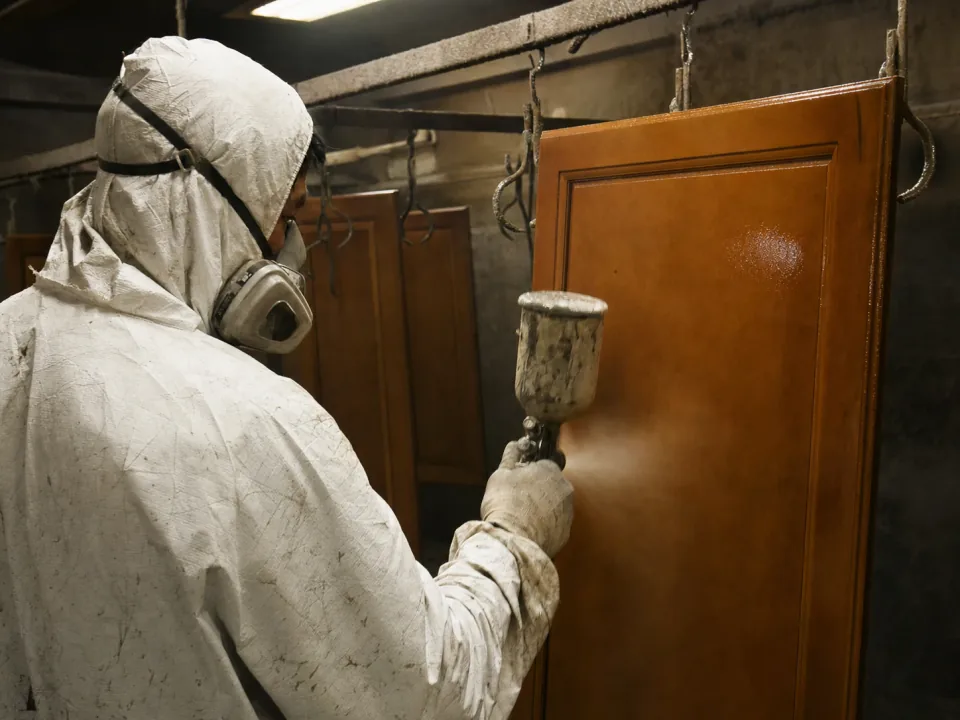
The finishing bay plans itself against sprayers, cure times and dispatch dates. A finish or fit check that fails raises an NCR on the spot, so a mark or a gap is caught at the bench — not by the customer.
Quality →Dispatch with the fire-cert attached
The piece ships with its label and paperwork built from the record — foam batch, fabric lot and flammability certificates already linked. If a batch is ever recalled, one search lists every suite it went into, both ways.
Documents →The craft is there. The paper trail isn't.
It's everything around the making — chasing a spec change, proving which foam went where, telling a customer a real date — that eats the day and puts a made-to-order shop at risk.
The job bag falls behind
A spec changes on a call, the cutting list is already on the bench, and the frame gets built to the old size. The rework eats a day and the margin on a one-off job you priced tight.
Fire evidence can't be found
UK upholstery rules want the FR foam and fabric batch behind every piece. When it's logged on paper in a folder — or not at all — a recall or an inspection becomes a frightening scramble through old job bags.
Dates are a guess
The finishing bay is the bottleneck and nobody can see into it. So delivery dates are promised off a whiteboard, missed, and the customer hears about the slip from you late instead of early.
The blocks that run a made-to-order shop.
Configured around your cutting lists, finishing schedules and report formats — the parts a furniture and joinery maker leans on, wired to one auditable record.
Turn an order into a cutting list and a route across the benches, with the spec pinned to the job — so a change on a call reaches the bench, not the bin.
Routing →Every piece tied to its FR foam batch, fabric roll and board — full trace from goods-in to delivered suite, and a recall list built in one search, both ways.
Data thread →Flammability certs and batch evidence assemble against the job as it's built — the label and paperwork print themselves at dispatch, not the night before.
Documents →Plan the finishing bay against sprayers, cure times and dispatch dates, see the backlog live, and tell a customer a date you'll actually hit.
Scheduling →Sheet, timber, foam and fabric drawn down as jobs consume them — so the shelf, the cutting list and the reorder point stay in step without a stock-take.
Inventory →Finish and fit checks logged at the bench, with NCRs raised on the spot — a mark or a gap caught before the piece leaves the shop, not after it's fitted.
Quality →The suite ships with its paperwork done.
When the batch is logged at the bench and the finishing bay is visible, made-to-order stops being a scramble — and delivery dates become something you can promise.
Questions, answered.
Is Bulk an ERP or a cabinet-shop estimator?
Neither, on purpose. Estimators quote and cut-optimise, then go quiet once the job hits the bench; an ERP wants your whole business re-platformed first. Bulk runs the making itself — cutting lists and routes, the finishing schedule, batch and fabric-lot traceability, NCRs, stock and the fire-safety paperwork. Shops that keep an estimator or accounts package keep them; most makers our size replace spreadsheets and job bags, not systems.
Does Bulk handle UK upholstered-furniture fire-safety evidence?
Yes — that's a headline use. The FR foam batch and fabric roll are logged against the piece at the bench, and the flammability certificates link to the job. When an inspector asks, or a batch is recalled, one search lists every suite that foam or fabric went into — forward and back — in seconds instead of a folder-by-folder hunt.
Can it work for one-off commissions as well as repeat lines?
Yes. Made-to-order is the default: a one-off commission gets its own cutting list, route and record just like a repeat line, and the two run side by side on the same board. You get the tracking without forcing bespoke work into a batch mould it doesn't fit.
Does Bulk do cut optimisation or nesting?
No — that's your CAD/CAM or nesting software's job, and Bulk doesn't try to replace it. Bulk takes the cutting list into production and tracks what actually happens to those parts. Where your saw or CNC exposes data, we can bring the cut list in rather than re-key it; the specialist optimiser stays.
How does it handle stock across board, timber, foam and fabric?
Material comes off stock the moment a job consumes it at the bench, so the shelf and the record stay in step without a weekly stock-take. Foam and fabric carry their batch and lot, so consumption and traceability are the same action — you're not tracking stock in one place and fire evidence in another.
What does it cost, and how long is rollout for a single workshop?
One per-site price with every module included — no per-module upsell, hosting and rollout in the figure. Rollout runs one line end to end first — order to dispatch on a job you make every week — proven on real work in weeks, then the rest follow the same pattern. Never a big-bang cutover, and early-access shops work directly with the build team.
Let's run one job through.
Pick a piece you make every week. We'll configure it end to end — order, cutting list, finishing, batches and the fire-cert — and show you the paperwork assembling itself.