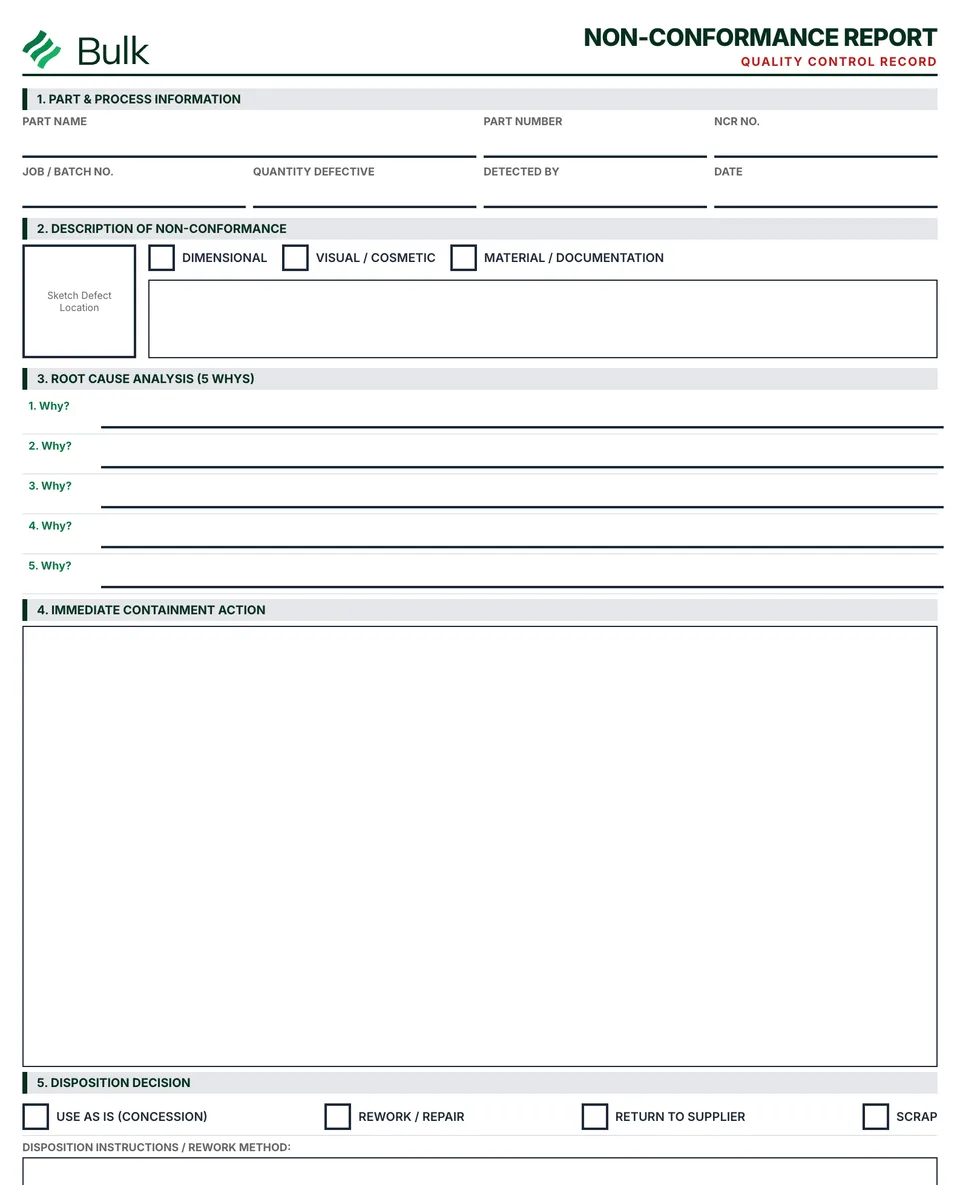
 Non-Conformance Report (NCR)Identify the requirement and observed departure, using the part revision, lot, quantities and objective evidence..
CAPA Form (Corrective & Preventive Action)
Define the observed problem, scope and risk; link the NCR or complaint.
What it's for
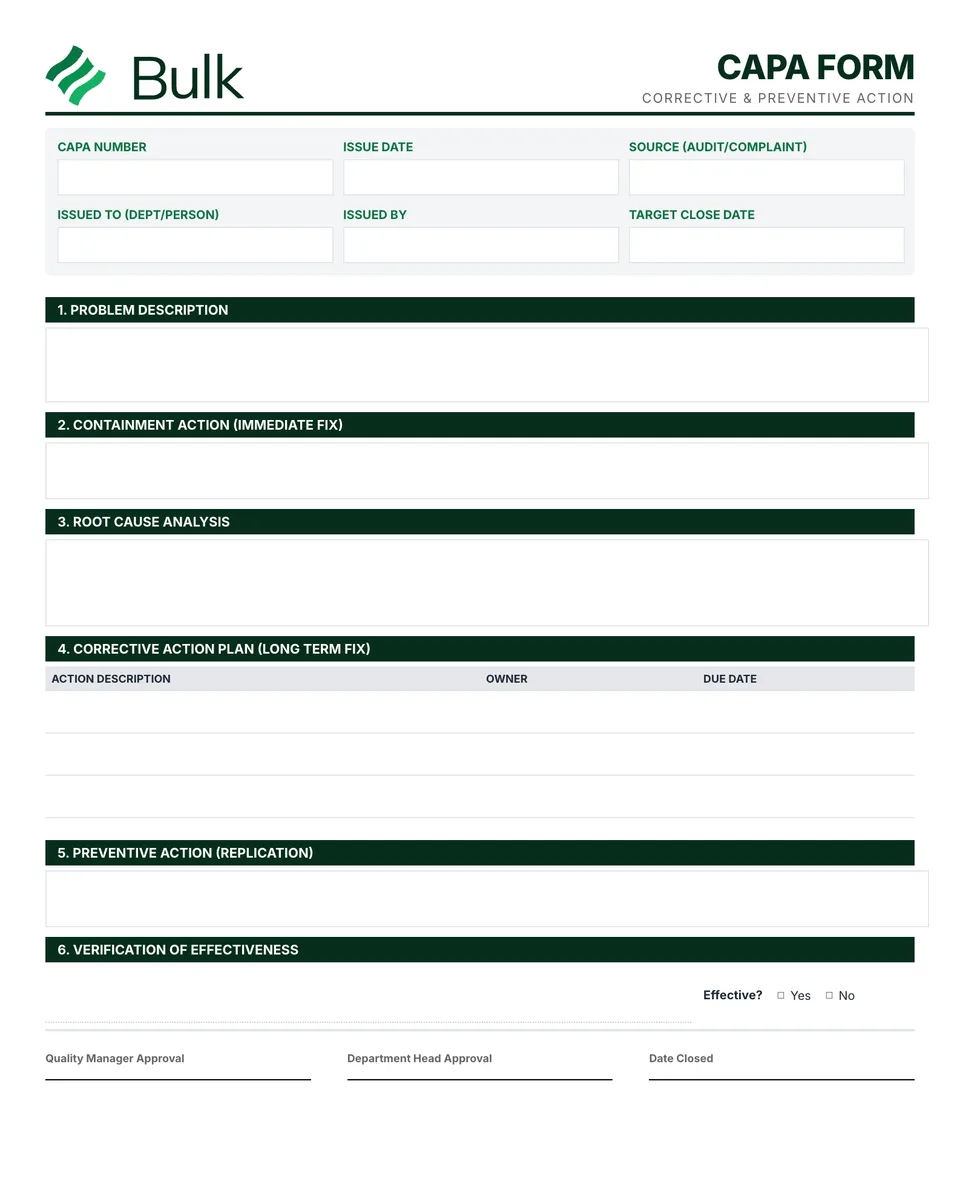
Use this CAPA form (corrective and preventive action) to keep the working record, its evidence and follow-up together. Define the observed problem, scope and risk; link the NCR or complaint. Record immediate containment separately from the long-term corrective action.
CAPA format, CAPA template or corrective action form?
Whether you search for a CAPA format, a CAPA document template or a corrective and preventive action template, the structure is the same: problem statement, containment, root cause, corrective action, preventive action and an effectiveness check before closure. This form follows that order, and its completed page doubles as a CAPA format example. A corrective action form or corrective action plan often stops at the fix; the preventive and verification sections are what make it a CAPA. Test causes with a root cause analysis or a 5 Whys worksheet before committing to actions.
What you can download
The PDF contains the original blank form, followed by a completed fictional example and a separate instructions page. Print only the blank pages for use at work; keep the example and guide as references. The download is free; enter your email to receive a secure link valid for seven days. Product-news consent is optional.
Completed manufacturing example
A recurring burr is contained before tool wear is verified as a cause. The action changes the insert-life review and checks three later lots before closure.
Replacing the insert corrects the immediate condition; the insert-life trigger addresses recurrence. Zero failures in the reviewed sample supports this check but does not prove that future failure is impossible.
When to use this template
CAPA requirements depend on the applicable quality system. This general manufacturing form does not by itself establish regulatory compliance.
Continue with Non-Conformance Report (NCR), Root cause analysis, 8D report, 5 Whys worksheet.
For shared records, evidence and follow-up, explore Bulk quality. Start a free trial to run it live, no card needed.
How to use it
- Define the observed problem, scope and risk; link the NCR or complaint. Record immediate containment separately from the long-term corrective action.
- Test proposed causes against evidence. Assign each action an owner and due date, including changes needed to prevent the same cause elsewhere.
- Define the effectiveness measure and review window before closure. Record actual results, residual concerns and the authorised closure decision.
Key features
- Problem description and impact assessment
- Root cause analysis documentation section
- Corrective action planning with ownership
- Preventive measures to avoid recurrence
- Effectiveness verification and close-out
- Risk assessment and priority classification
- Completed fictional example and instructions
Ideal for
- Quality managers handling customer complaints
Common uses
- Investigating repeated production defects
- Following up a customer complaint
- Checking whether corrective action worked
Questions, answered.
01
What is the difference between a CAPA and a corrective action plan?
A corrective action plan removes the cause of a problem that has already happened; the corrective action plan template is that action list. A CAPA adds preventive action, applying the lesson to similar processes or risks before they fail, and an effectiveness check before the record is closed.
02
What is the standard CAPA format?
A typical CAPA format runs problem description, immediate containment, root cause, corrective action, preventive action, owners and due dates, then an effectiveness check and closure decision. The completed page in this PDF is a CAPA format example with each step filled in.
03
When should you raise a CAPA?
Raise one when fixing the symptom is not enough, for example a repeat defect, a customer complaint or an audit finding. Many teams open a CAPA from a non-conformance report.
04
How do you check that a corrective action was effective?
Define the measure and review window before closure, such as no repeat of the defect across the next three lots, then record the actual result. A clean sample supports closure but does not prove the problem can never return.
Related templates.
Non-Conformance Report (NCR)Identify the requirement and observed departure, using the part revision, lot, quantities and objective evidence..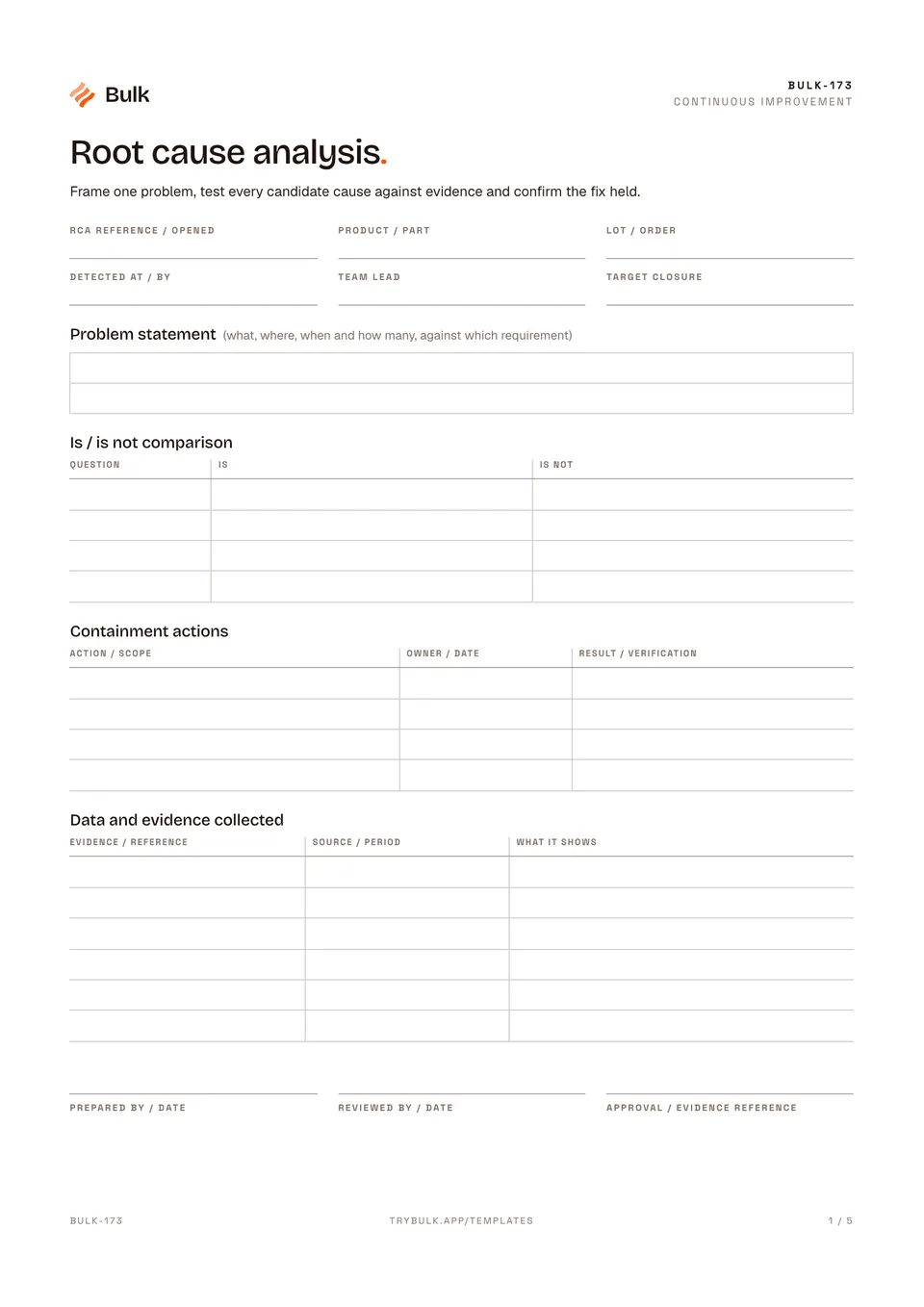 Root cause analysisFrame one problem, test every candidate cause against evidence and confirm the fix held.
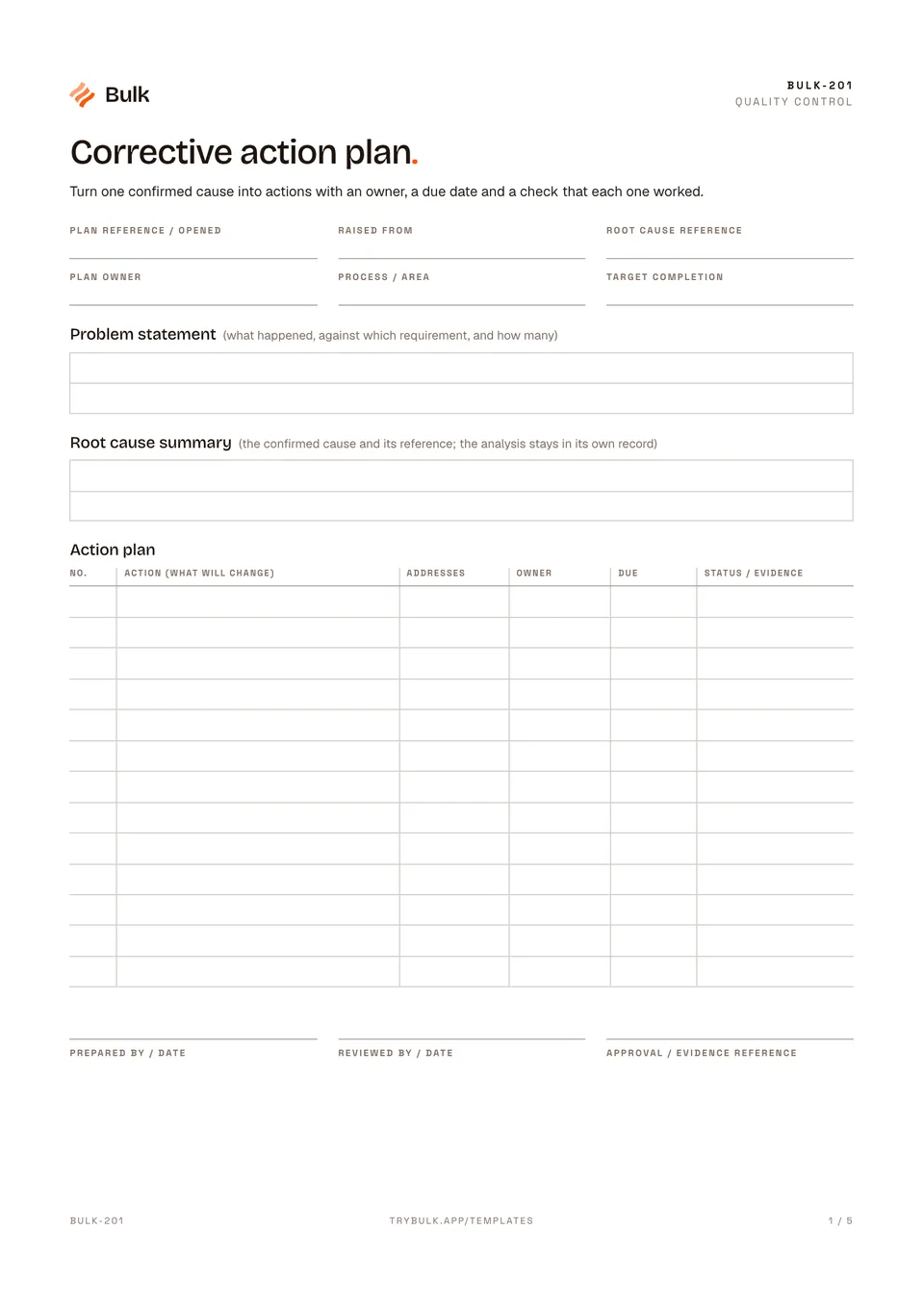 Corrective Action Plan TemplateTurn one confirmed cause into actions with an owner, a due date and a check that each one worked.
Turn the form into a live workflow.
Bulk connects the same checks, evidence, owners and approvals to the work happening on your floor.