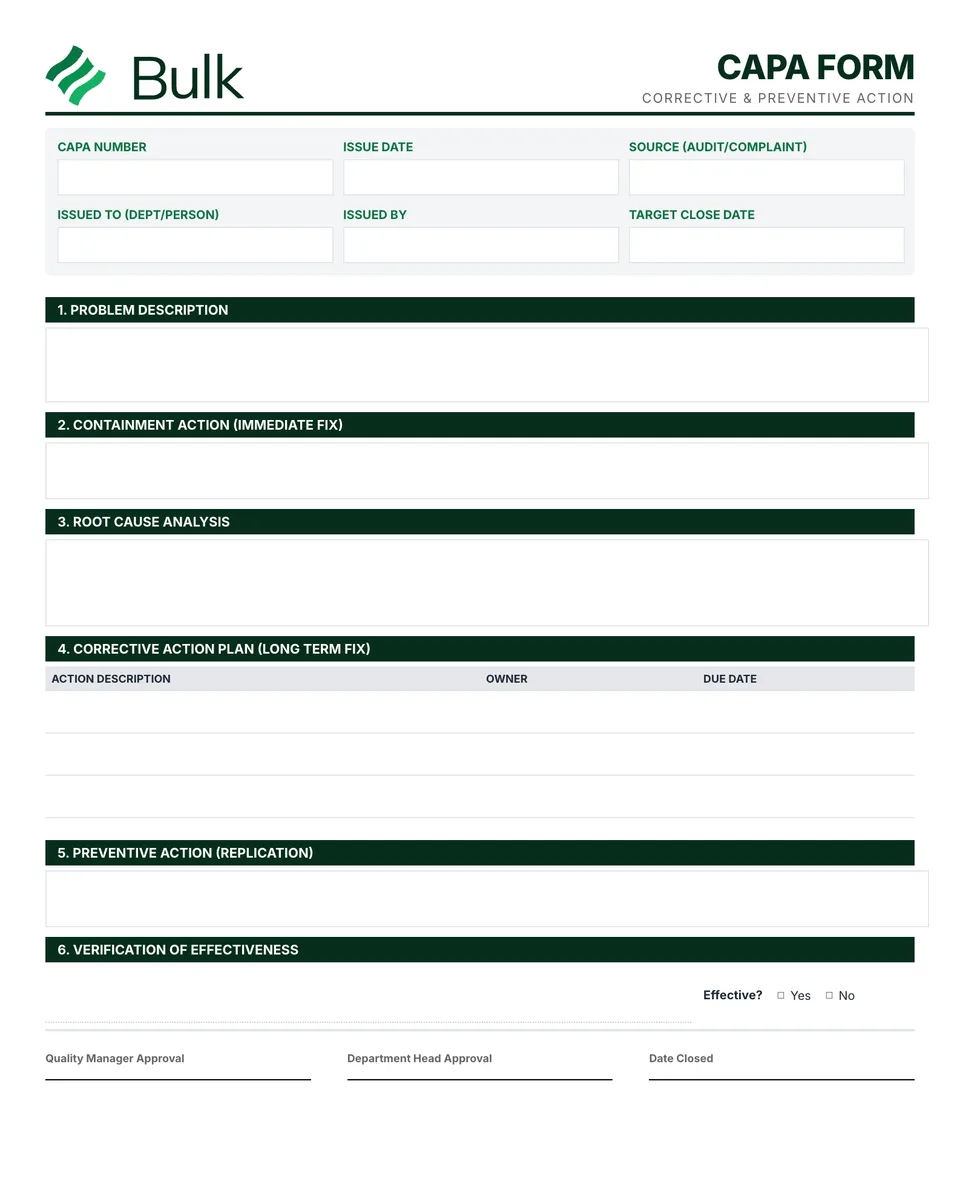
 CAPA Form (Corrective & Preventive Action)Define the observed problem, scope and risk; link the NCR or complaint.
Non-Conformance Report (NCR)
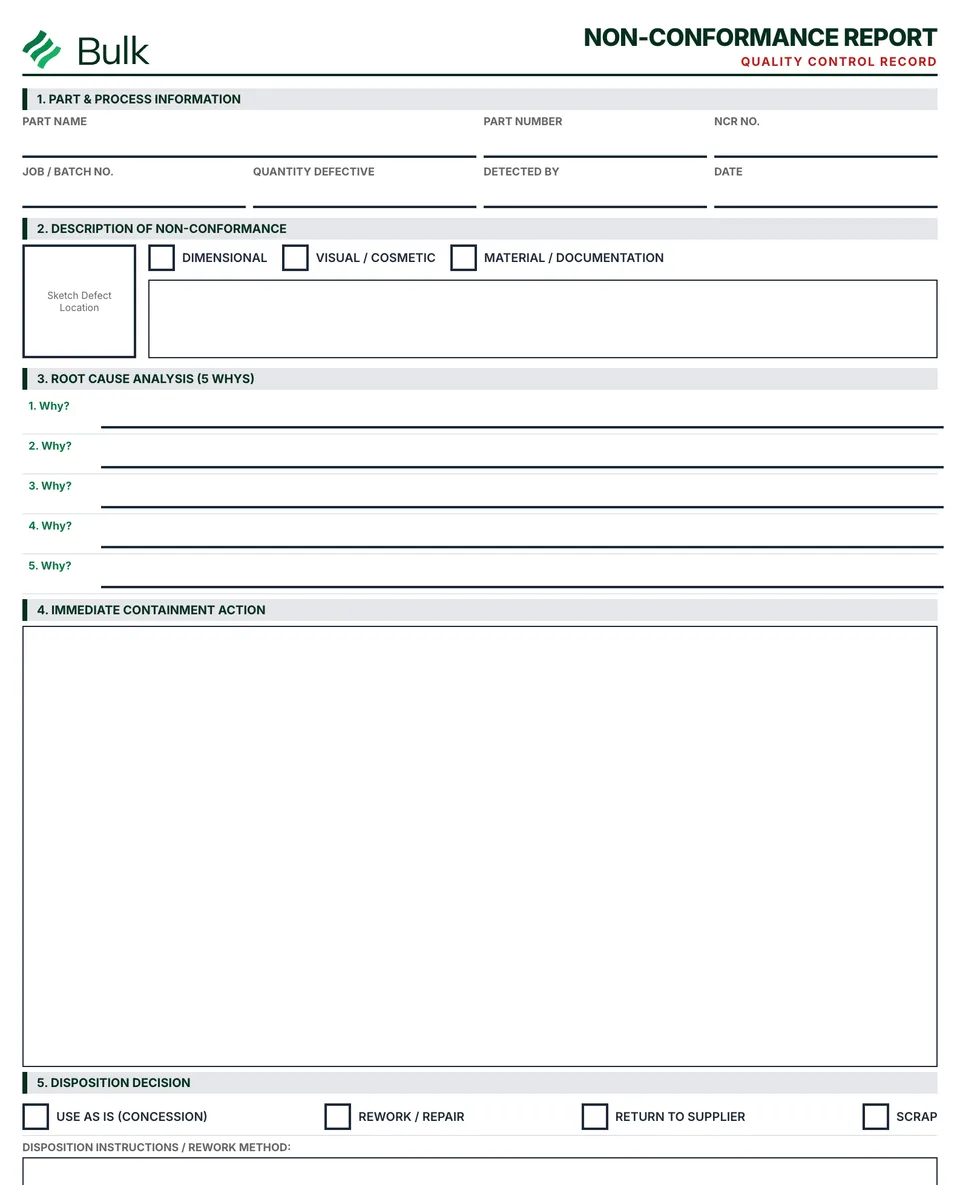
Identify the requirement and observed departure, using the part revision, lot, quantities and objective evidence..
What it's for
Use this non-conformance report (ncr) to keep the working record, its evidence and follow-up together. Identify the requirement and observed departure, using the part revision, lot, quantities and objective evidence.
What does non-conformance mean?
A non-conformance is any product, process or record that does not meet a specified requirement. ISO 9000 uses the term nonconformity and defines it as the non-fulfilment of a requirement. The requirement can come from the drawing or specification, the customer’s purchase order or contract, a regulation, or the plant’s own procedures and work instructions.
In manufacturing, typical examples are a dimension out of tolerance, the wrong material or finish, a missing inspection record, a process run outside its set parameters or a supplier delivery that fails incoming inspection. In an audit, findings are often graded as major or minor non-conformances against a standard such as ISO 9001.
ISO 9001 asks for nonconforming output to be identified and controlled so it is not used or delivered by mistake. That is what a non-conformance report (NCR) is for: it records the requirement, what was found, the quantity affected, the containment and the authorised disposition (rework, repair, scrap, return or use as is), and it links to a corrective action when the cause needs investigating. A non-conformance is not automatically a defect: ISO 9000 reserves “defect” for a nonconformity that affects intended or specified use.
What you can download
The PDF contains the original blank form, followed by a completed fictional example and a separate instructions page. Print only the blank pages for use at work; keep the example and guide as references. The download is free; enter your email to receive a secure link valid for seven days. Product-news consent is optional.
Completed manufacturing example
A six-piece burr defect is contained within a 40-piece lot. The record separates rework approval, reinspection, cost and a linked corrective-action investigation.
The example’s rework cost is 0.5 x 40 = 20 and sorting cost is 0.5 x 30 = 15, giving 35 in the site’s chosen currency. Cost does not determine release authority.
When to use this template
An NCR records a nonconformance and its disposition. Filling the form is not customer concession or permission to ship nonconforming product.
Continue with CAPA Form (Corrective & Preventive Action), 8D report, Quality Control Checklist.
For shared records, evidence and follow-up, explore Bulk quality. Start a free trial to run it live, no card needed.
How to use it
- Identify the requirement and observed departure, using the part revision, lot, quantities and objective evidence.
- Record containment and hold locations, then obtain the authorised disposition. Rework, scrap, return and use-as-is are distinct decisions.
- Retain reinspection and release evidence, record actual costs and link CAPA or 8D when the issue needs a wider investigation. Close only after the required approvals.
Key features
- Detailed non-conformance description and evidence
- Affected quantity and lot/serial number tracking
- Disposition options (scrap, rework, use-as-is, return)
- Containment actions to prevent further impact
- Root cause analysis documentation
- Cost tracking for quality failure cost analysis
- Completed fictional example and instructions
Ideal for
- Quality inspectors documenting defects
- Receiving inspectors rejecting incoming materials
- Quality managers tracking quality performance metrics
Common uses
- Recording a failed inspection
- Containing a suspect batch
- Tracking disposition and reinspection
Questions, answered.
01
What is the meaning of non-conformance?
A non-conformance is the failure to meet a specified requirement. ISO 9000 calls it a nonconformity, the non-fulfilment of a requirement, whether that requirement comes from a drawing, a specification, a customer order, a regulation or the plant's own procedures. A part out of tolerance and a check that was never recorded are both non-conformances.
02
What is the difference between a non-conformance and a defect?
Every defect is a non-conformance, but not the other way round. ISO 9000 defines a defect as a nonconformity related to an intended or specified use, so a cosmetic mark outside the drawing's finish requirement is a non-conformance even if the part still works. Record both on the NCR; the disposition decides what happens to the parts.
Related templates.
CAPA Form (Corrective & Preventive Action)Define the observed problem, scope and risk; link the NCR or complaint.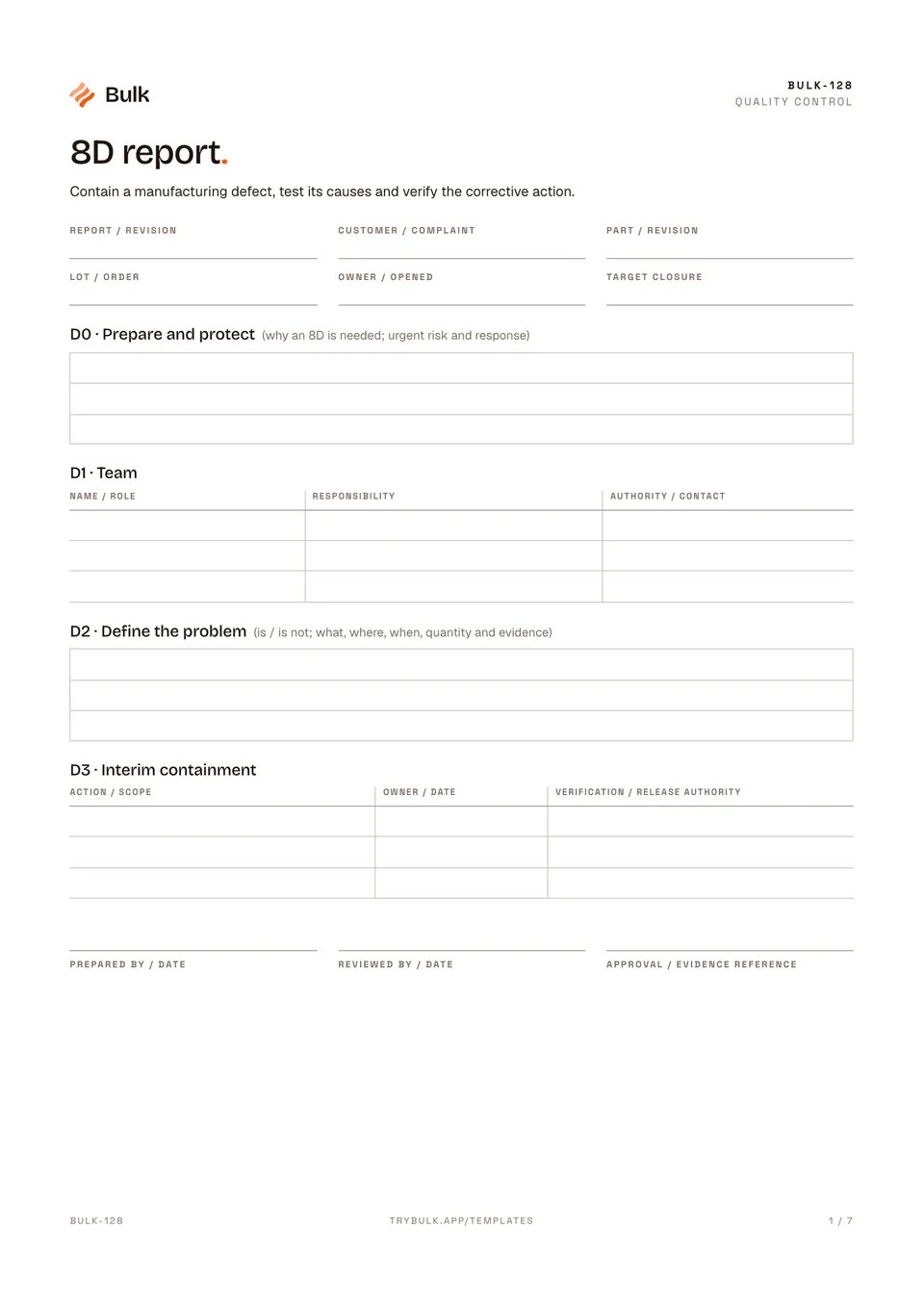 8D reportContain a manufacturing defect, test its causes and verify the corrective action.
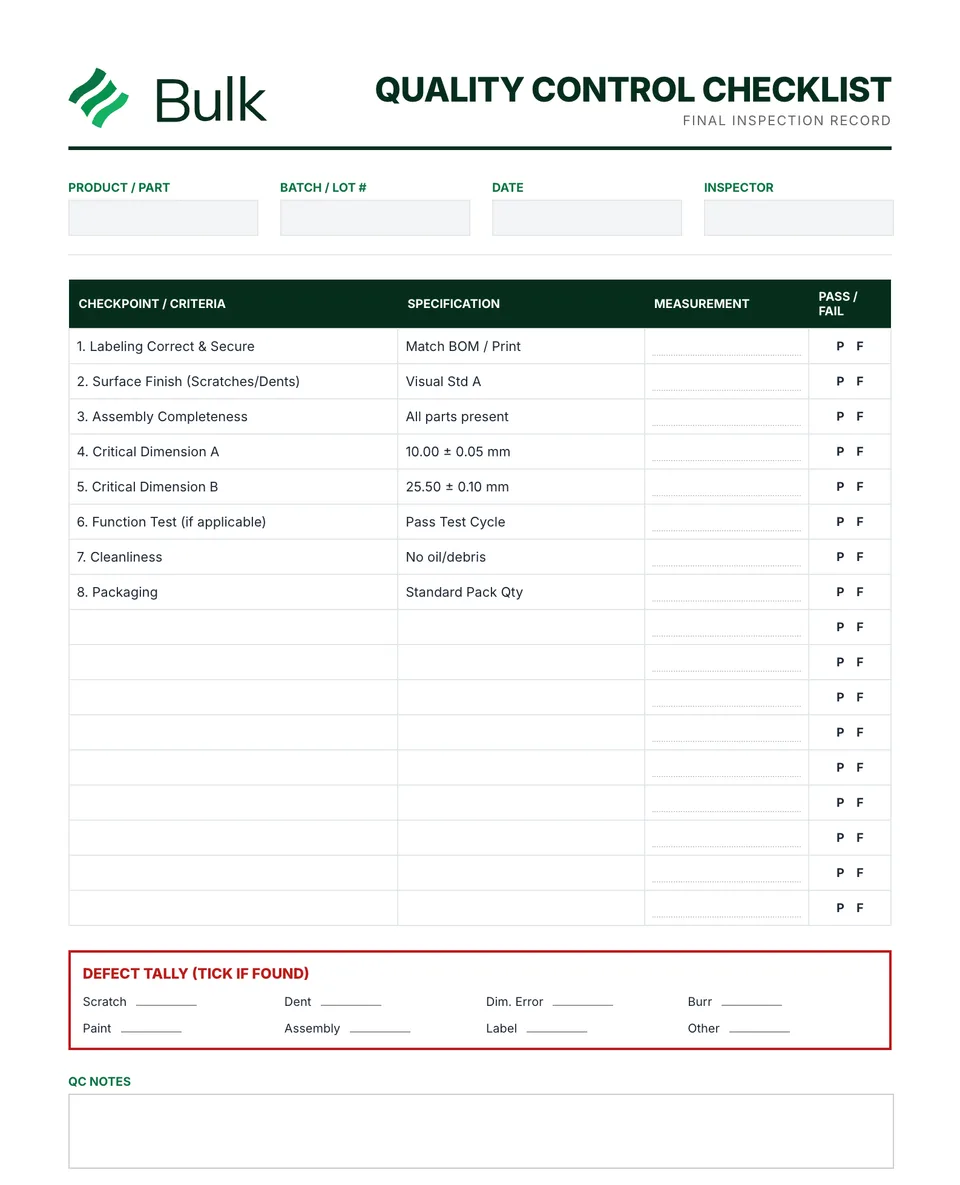 Quality Control ChecklistConfirm the product, revision, lot, inspection stage and approved plan.
Turn the form into a live workflow.
Bulk connects the same checks, evidence, owners and approvals to the work happening on your floor.