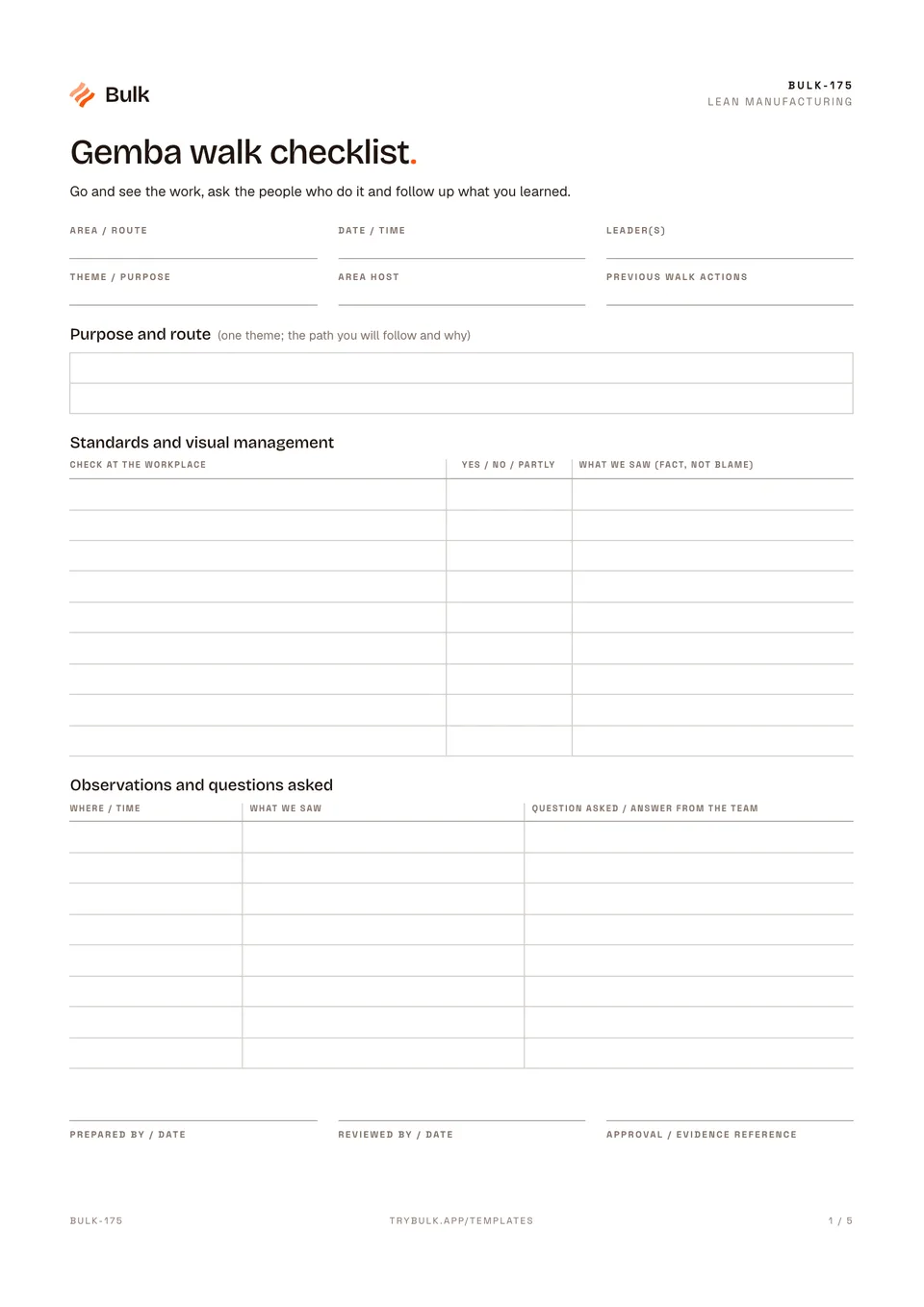
 Gemba walk checklistGo and see the work, ask the people who do it and follow up what you learned.
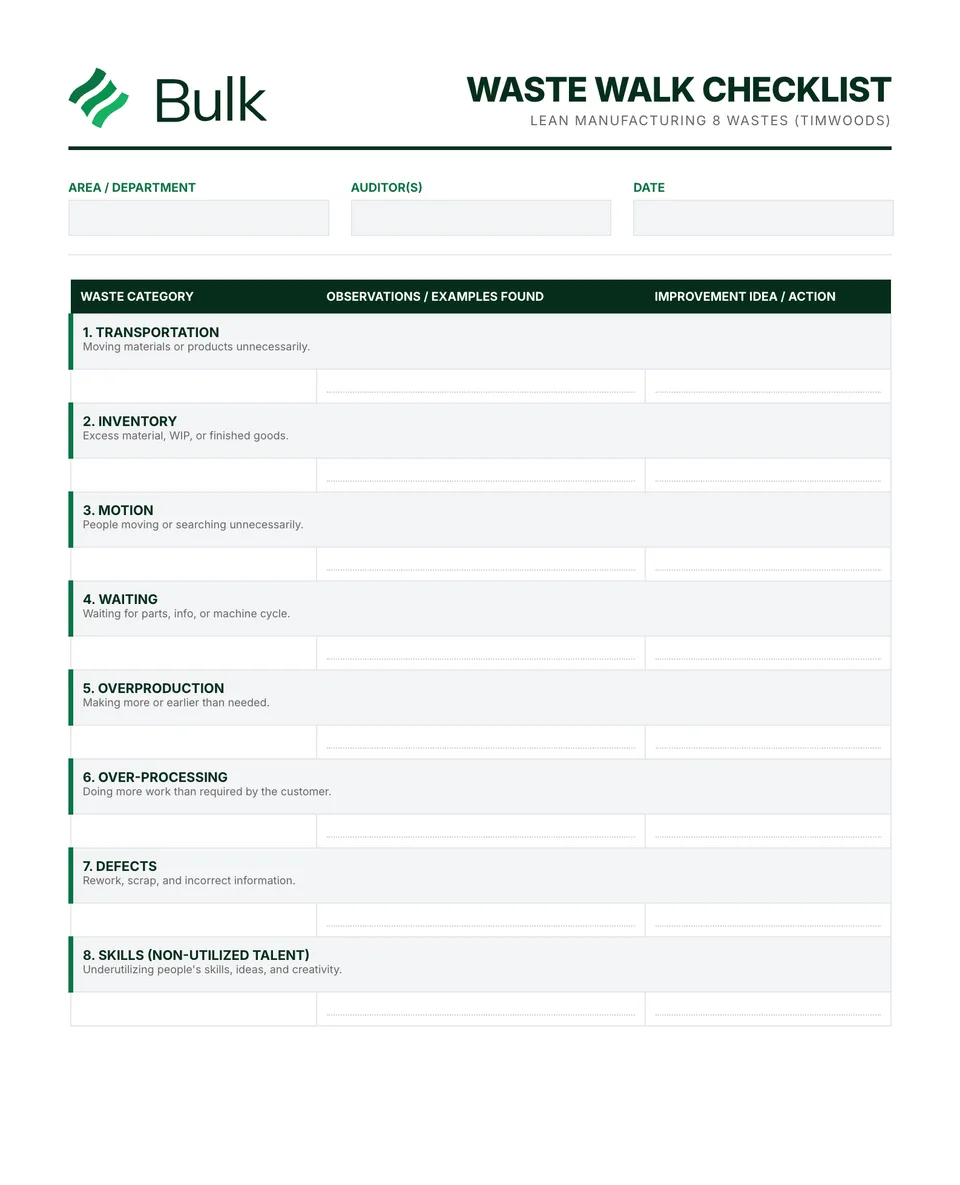
Waste Walk Checklist
Agree the area and observe normal work with the people doing it.
What it's for
Use this waste walk checklist to keep the working record, its evidence and follow-up together. Agree the area and observe normal work with the people doing it. Record evidence, location and the effect on the process rather than labelling a person as waste.
The eight wastes: TIMWOODS and DOWNTIME
The checklist is organised by the eight wastes of lean, remembered as TIMWOODS (transport, inventory, motion, waiting, overproduction, over-processing, defects, skills) or DOWNTIME (defects, overproduction, waiting, non-utilised talent, transport, inventory, motion, extra processing). A waste walk looks only for these process losses. A broader gemba walk, where leaders review safety, standards, problems and support for the team, has its own gemba walk checklist.
What you can download
The PDF contains the original blank form, followed by a completed fictional example and a separate instructions page. Print only the blank pages for use at work; keep the example and guide as references. The download is free; enter your email to receive a secure link valid for seven days. Product-news consent is optional.
Completed manufacturing example
A walk records observations across the eight wastes, including waiting for a gauge, duplicate recording and excess WIP. Three findings become owned follow-up actions.
The five-minute gauge wait is an observation. Staging the gauge is a proposed countermeasure whose effect needs another observation; it is not an automatic saving claim.
When to use this template
A waste walk looks for process losses. It is not a 5S score, a compliance inspection or a complete risk assessment.
Continue with Gemba walk checklist, 5S audit checklist, Spaghetti diagram, Kaizen Event Planning Form.
For shared records, evidence and follow-up, explore Bulk production. Start a free trial to run it live, no card needed.
How to use it
- Agree the area and observe normal work with the people doing it. Record evidence, location and the effect on the process rather than labelling a person as waste.
- Use the eight-waste prompts to organise observations. Distinguish observed facts from assumptions and assess the impact with the area owner.
- Assign practical actions, trial changes under the site's review process and verify the effect on a later walk. Keep unresolved findings visible.
Key features
- Checklist organized by the 8 wastes (DOWNTIME)
- Guiding questions for each waste category
- Photo documentation and location notes
- Impact assessment and prioritization
- Quick win identification
- Follow-up action assignment
- Completed fictional example and instructions
Ideal for
- Lean facilitators leading waste identification exercises
- Leadership teams walking the floor to see waste
- Continuous improvement teams generating project ideas
- New employees learning to see waste
Common uses
- Recording waste observations on the shop floor
- Grouping findings under the eight wastes
- Selecting and following up improvement trials
Questions, answered.
01
What are the 8 wastes of lean?
Transport, inventory, motion, waiting, overproduction, over-processing, defects and unused skills, often remembered as TIMWOODS or DOWNTIME. The first seven come from the Toyota Production System; unused talent was added later.
02
What is the difference between a waste walk and a gemba walk?
A waste walk is a focused observation of the eight wastes in one area. A gemba walk is broader, with leaders going to where the work happens to understand problems, check standards and support the team; use the gemba walk checklist for that.
03
How do you conduct a waste walk?
Pick one area, walk it with the people who do the work, observe normal work and note evidence against each waste. Agree a few owned actions and check their effect on a later walk.
Related templates.
Gemba walk checklistGo and see the work, ask the people who do it and follow up what you learned.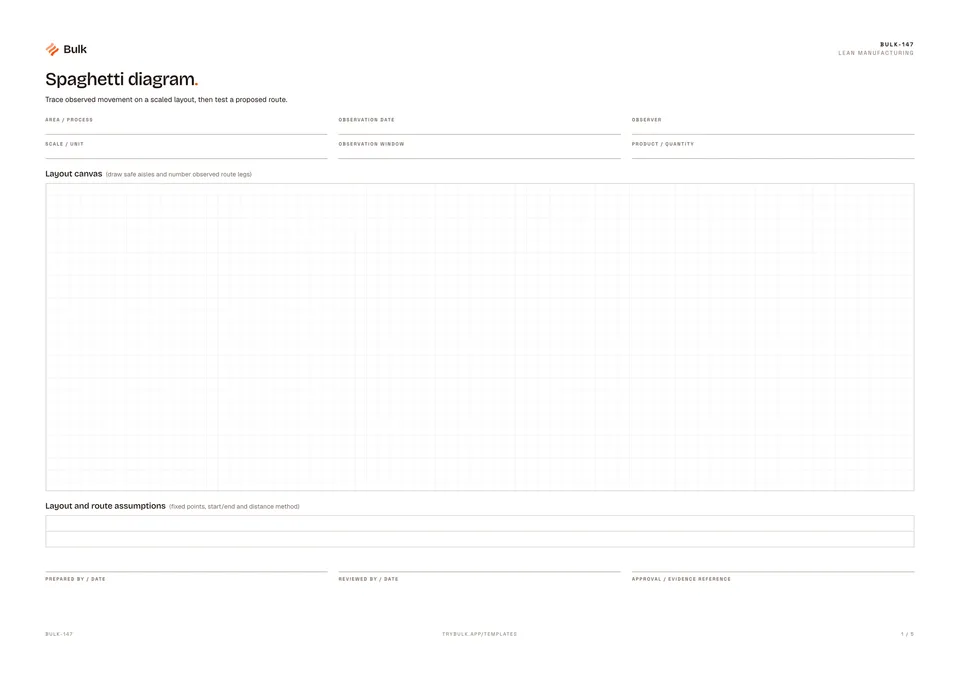 Spaghetti diagramTrace observed movement on a scaled layout, then test a proposed route.
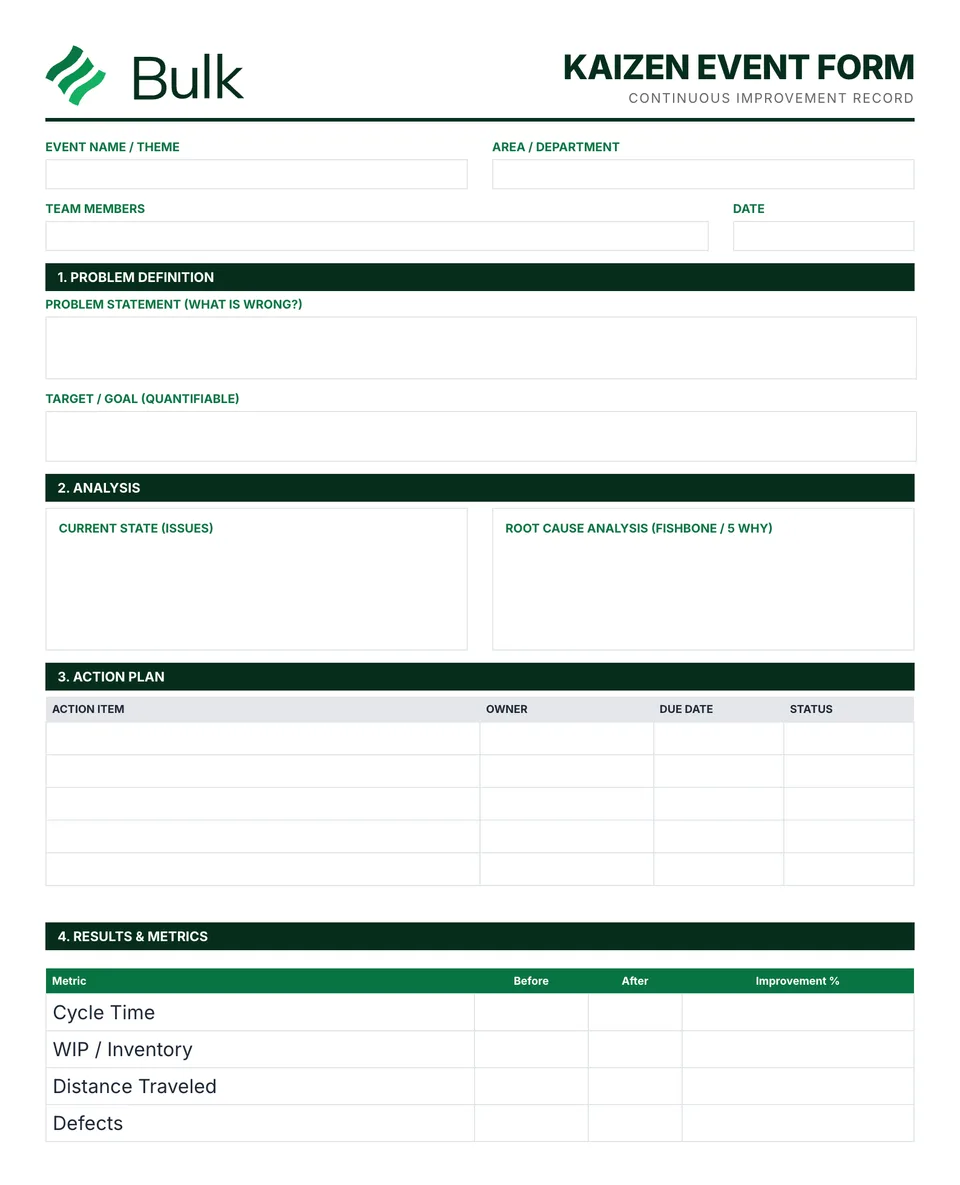 Kaizen Event TemplateAgree the problem, scope, sponsor, team, baseline and measurable target before the event.
Turn the form into a live workflow.
Bulk connects the same checks, evidence, owners and approvals to the work happening on your floor.