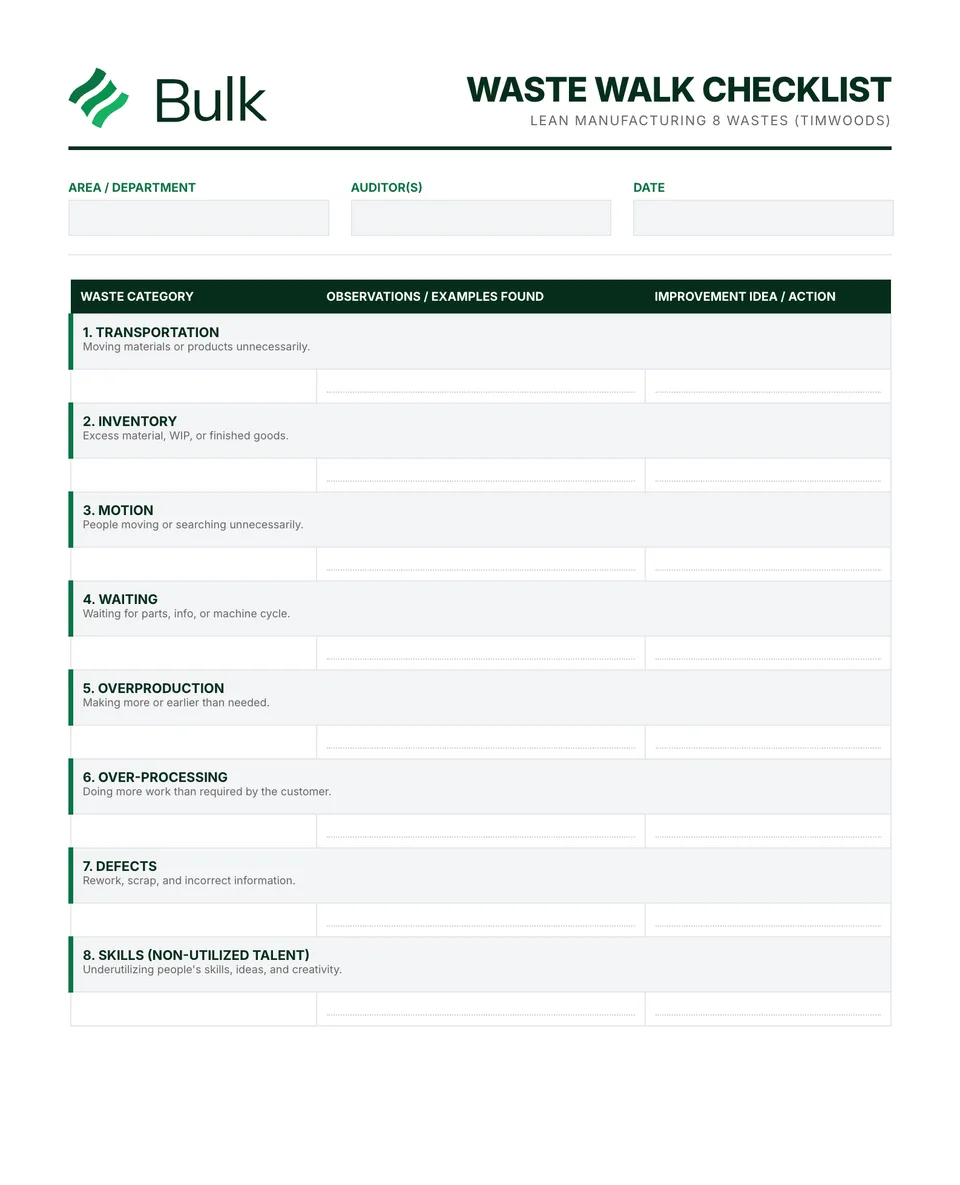
 Waste Walk ChecklistAgree the area and observe normal work with the people doing it.
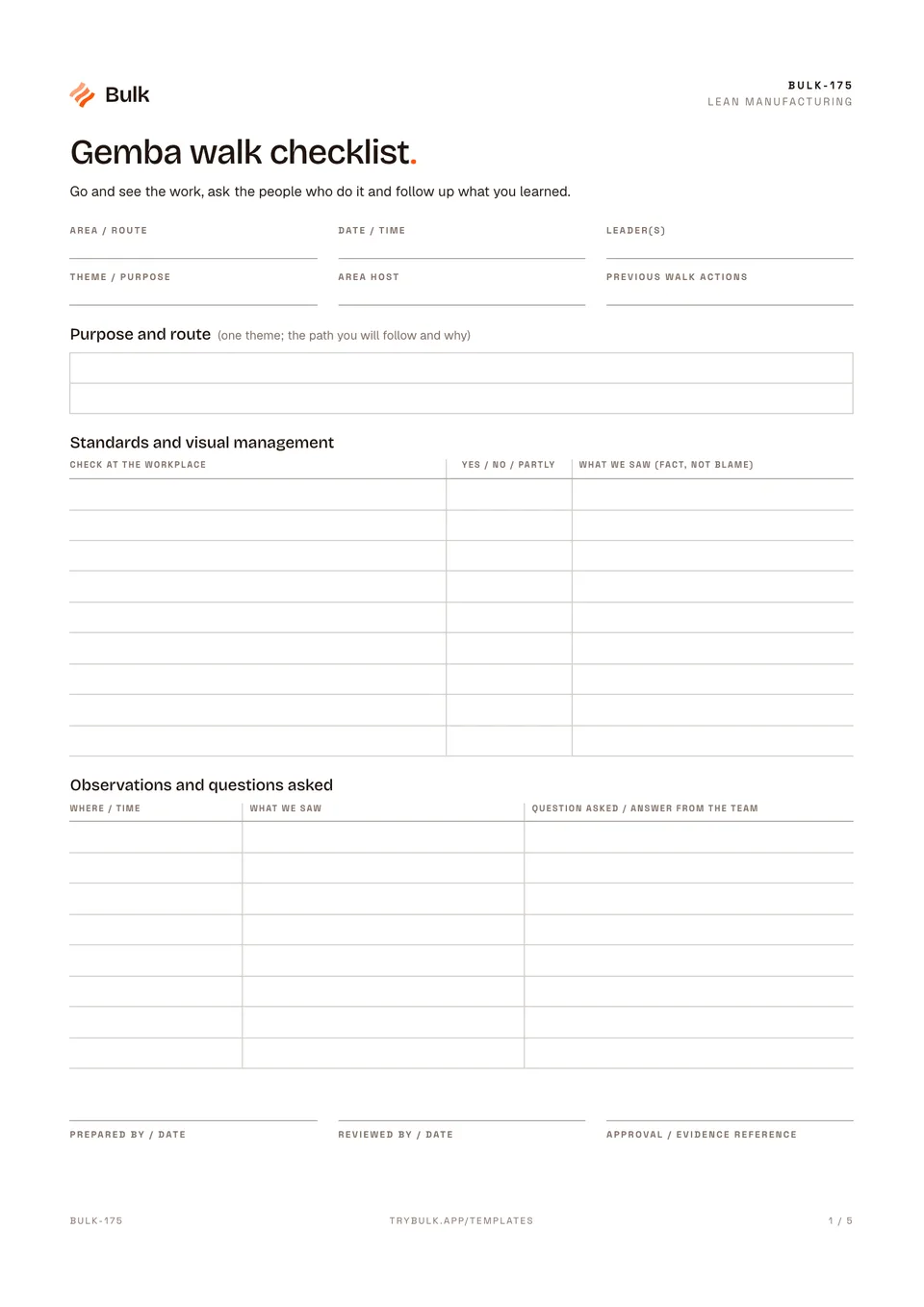
Gemba walk checklist
Go and see the work, ask the people who do it and follow up what you learned.
What it's for
Go and see the work, ask the people who do it and follow up what you learned.
What you can download
Available files: PDF. Each PDF includes the blank form first, a fictional completed example and instructions. The download is free; enter your email to receive a secure link valid for seven days. Product-news consent is optional.
Completed manufacturing example
An operations manager follows a kitted order from stores to assembly line 3 and on to dispatch, to find out why the line waited for kits twice in a week. The standards check finds standard work current at the station, a production board three hours out of date and two kits left on the floor beside their rack.
Questions to the team show that fastener shortages are only discovered at picking, and that operators walk to stores for missing bolts two or three times a shift. The walk ends with three follow-up actions, a trial of two-bin supply and a date to return, and the leader feeds back to the stores and line teams before leaving.
When to use this template
Use it for a regular leader walk with one theme: flow, quality, safety or a recent problem. Record facts, not blame, and agree actions rather than fixing problems on the spot. It is a leadership observation record, not a safety inspection or a scored audit, so report hazards through your site safety procedure straight away.
This is different from the waste walk checklist, which counts the eight wastes, and the 5S audit checklist, which scores the workplace. Check what you see against the posted standard work.
In Bulk, a gemba walk can run as a Custom audit from a versioned template on a schedule, with photos and signatures captured as you go and tasks created for failed items. Explore Bulk audits and start a free trial to run it live, no card needed.
How to use it
- Pick one theme and a route that follows the work (an order, a part or a customer request). Tell the area team in advance why you are coming.
- Check the standards and visual management the area already uses, then write what you saw as facts. Record observations, not judgements about people.
- Ask open questions of the people doing the work and write their answers. Do not solve problems on the spot; agree follow-up actions with an owner and date.
- Feed back to the team before you leave and close the previous walk’s actions at the start of the next one.
- This is a leader walk, not a waste count: use the waste walk checklist to tally the eight wastes, and the 5S audit checklist for a scored workplace audit.
Key features
- Purpose and route
- Standards and visual management
- Observations and questions asked
- Follow-up actions
- Feedback to the team
- Leader reflection
Ideal for
- Plant, operations and area managers running regular leader walks
- Continuous-improvement leads coaching leaders to go and see
Common uses
- Following one order or part through the process to understand a delay
- Checking standards and visual management where the work happens
- Recording questions, answers and follow-up actions from a walk
Questions, answered.
01
What should a gemba walk checklist include?
The theme and route, the standards and visual management to check, observations written as facts, the questions asked and the answers from the team, follow-up actions with owners and dates, and what you fed back before leaving.
02
What questions should you ask on a gemba walk?
Open questions about the work: what is the standard here, how do you know you are ahead or behind, what stopped you today, what happens when a part is missing, and what would make the job easier. Write down the answers, not your conclusions.
03
What is the difference between a gemba walk and a waste walk?
A gemba walk is a leader going to see the work, asking questions and following up. A waste walk tallies the eight wastes in an area; use the waste walk checklist for that, and the 5S audit checklist for a scored workplace audit.
04
How often should leaders do a gemba walk?
Often enough to keep the follow-up going: many plants walk daily at team-leader level and weekly for managers. Close the previous walk’s actions at the start of the next one.
Related templates.
Waste Walk ChecklistAgree the area and observe normal work with the people doing it.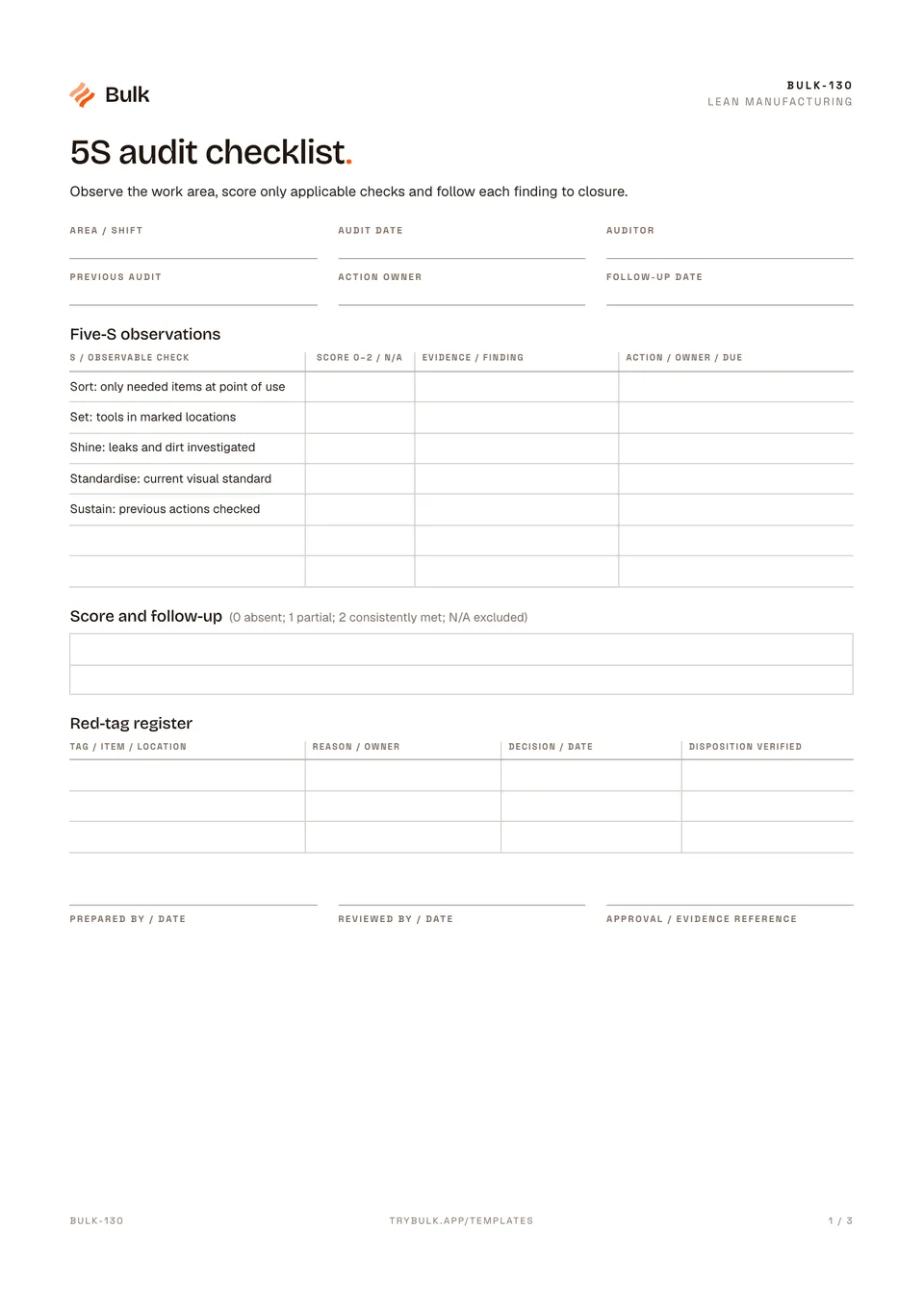 5S audit checklistObserve the work area, score only applicable checks and follow each finding to closure.
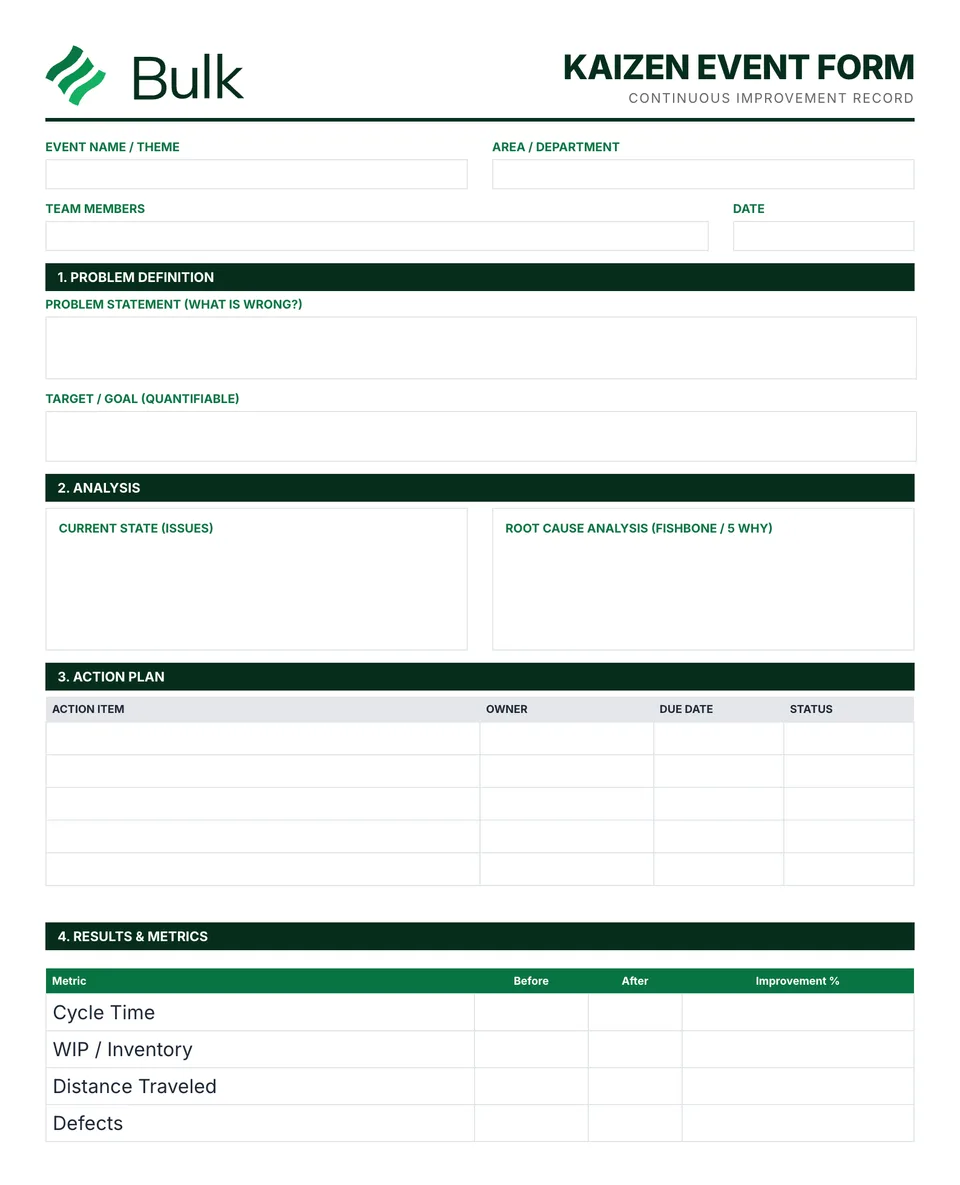 Kaizen Event TemplateAgree the problem, scope, sponsor, team, baseline and measurable target before the event.
Turn the form into a live workflow.
Bulk connects the same checks, evidence, owners and approvals to the work happening on your floor.