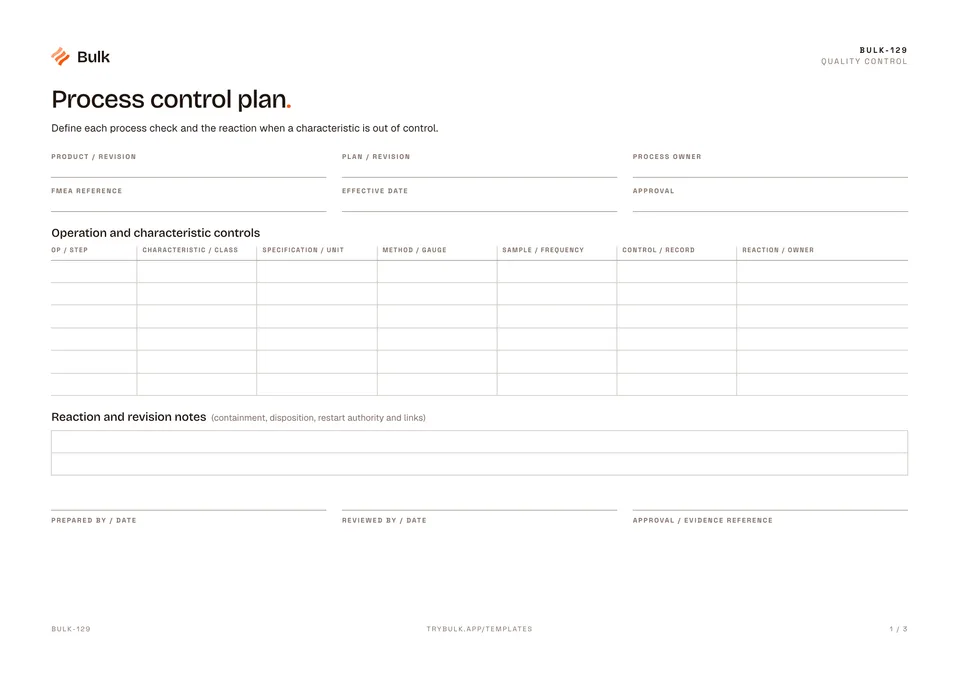
 Process control planDefine each process check and the reaction when a characteristic is out of control.
FMEA Template (Failure Mode and Effects Analysis)
Define the process boundary and use an agreed rating rubric.
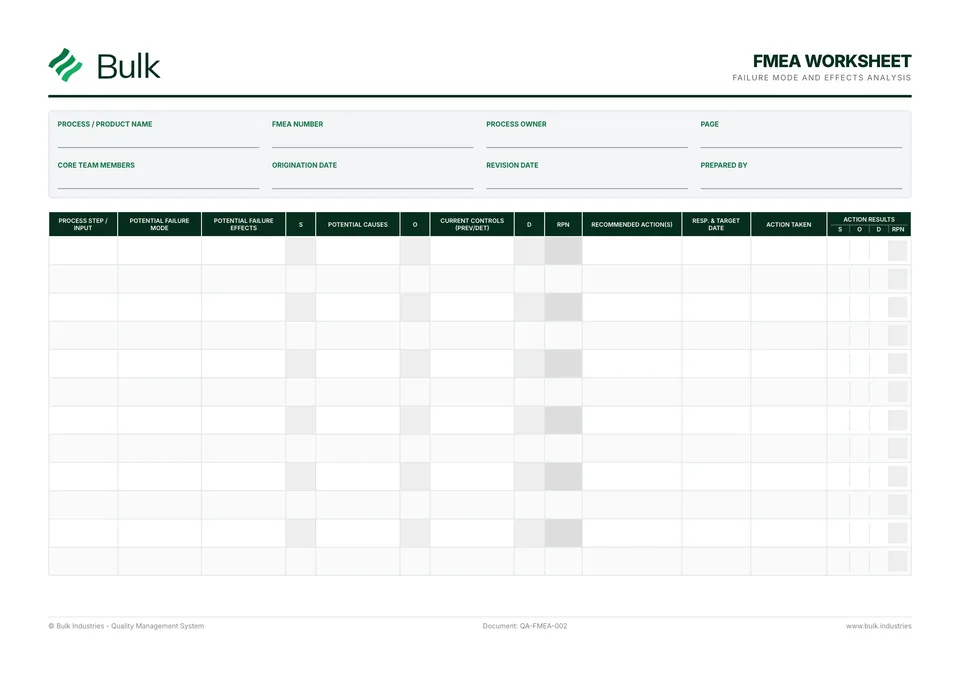
What it's for
Use this fmea template (failure mode and effects analysis) to keep the working record, its evidence and follow-up together. Define the process boundary and use an agreed rating rubric. Describe the failure mode, its effect and its cause as separate items.
What you can download
The PDF contains the original blank form, followed by a completed fictional example and a separate instructions page. Print only the blank pages for use at work; keep the example and guide as references. The download is free; enter your email to receive a secure link valid for seven days. Product-news consent is optional.
Completed manufacturing example
Two failure modes show why action decisions cannot rely on RPN alone: the lower-RPN burr still has the higher severity. Post-action ratings retain severity and reduce occurrence/detection only with evidence.
The flange row starts at 6 x 4 x 5 = 120 and becomes 6 x 2 x 3 = 36. The burr row starts at 8 x 3 x 4 = 96; its higher severity still requires attention.
When to use this template
This is an RPN-based worksheet. It does not implement the AIAG/VDA Action Priority method, and its abbreviated rating guide is not a substitute for the applicable manual or customer rubric.
Reference guidance: AIAG: FMEA handbook and Action Priority.
Continue with Process control plan, 8D report, Risk Assessment Form.
For shared records, evidence and follow-up, explore Bulk quality. Start a free trial to run it live, no card needed.
How to use it
- Define the process boundary and use an agreed rating rubric. Describe the failure mode, its effect and its cause as separate items.
- Rate severity, occurrence and detection against the stated controls and evidence. Calculate S x O x D, then assess severity and required action independently of the resulting RPN rank.
- Assign actions and reassess only after implementation evidence is reviewed. Retain the original ratings and state what supports each changed rating.
Key features
- Structured analysis of potential failure modes
- Severity, Occurrence, and Detection (SOD) rating scales
- Risk Priority Number (RPN) calculation and ranking
- Current controls and detection methods documentation
- Recommended actions for risk reduction
- Action tracking with before/after RPN comparison
- Completed fictional example and instructions
Ideal for
- Quality engineers developing control plans for new products
- Process engineers analyzing manufacturing operations
- Product development teams conducting design risk assessment
- IATF 16949 automotive suppliers meeting APQP requirements
Common uses
- Reviewing potential process failures
- Prioritising prevention and detection actions
- Reassessing risk after verified changes
Related templates.
Process control planDefine each process check and the reaction when a characteristic is out of control.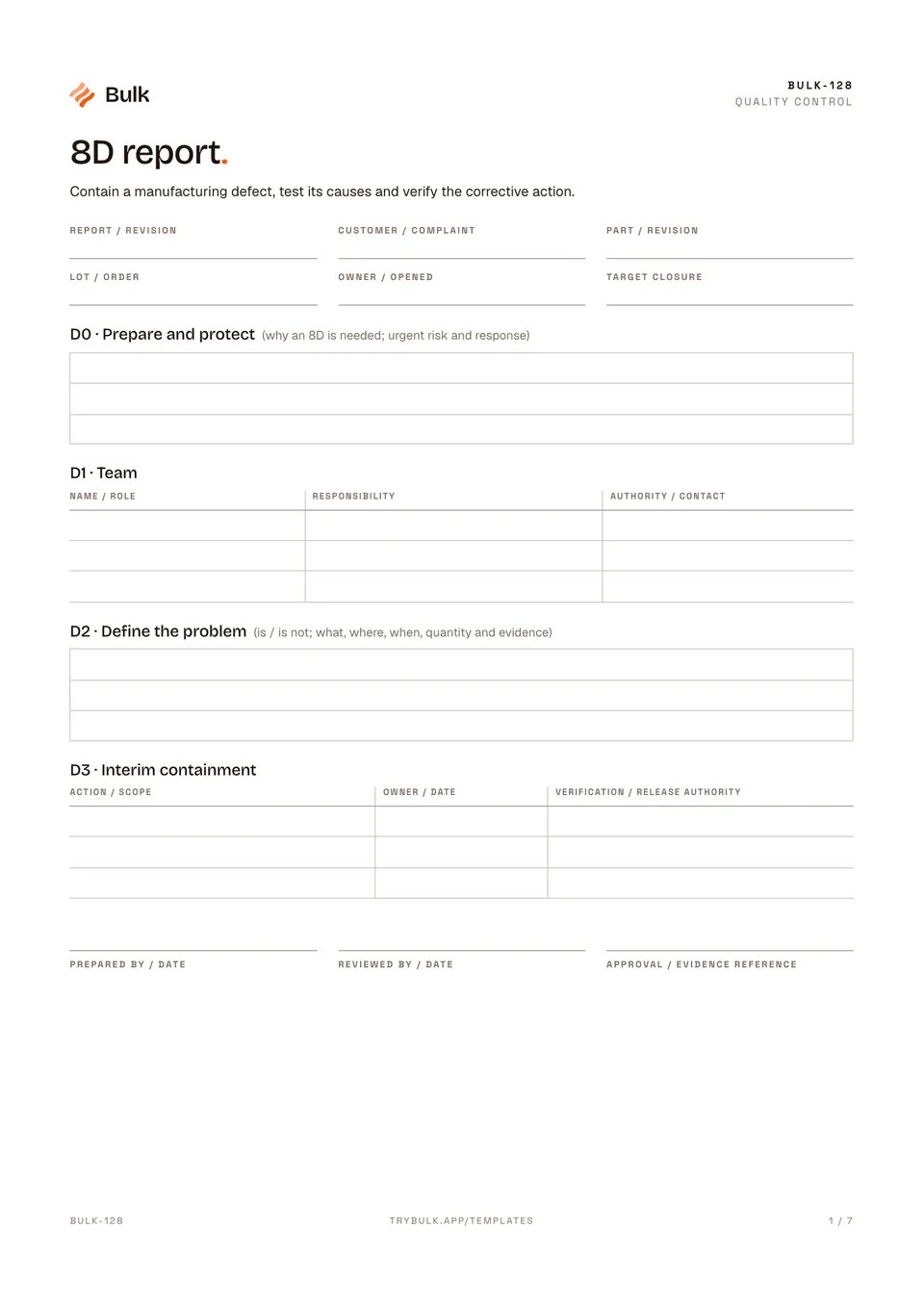 8D reportContain a manufacturing defect, test its causes and verify the corrective action.
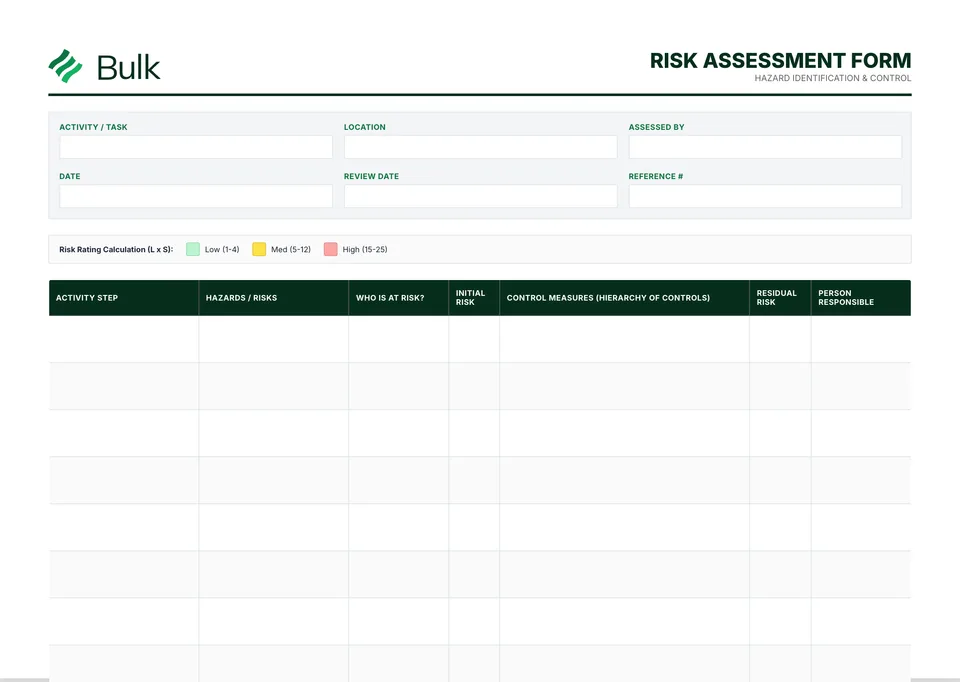 Risk Assessment FormObserve the task with the people doing it, identify each hazard and who may be harmed, and use the site's agreed risk-rating definitions.
Turn the form into a live workflow.
Bulk connects the same checks, evidence, owners and approvals to the work happening on your floor.