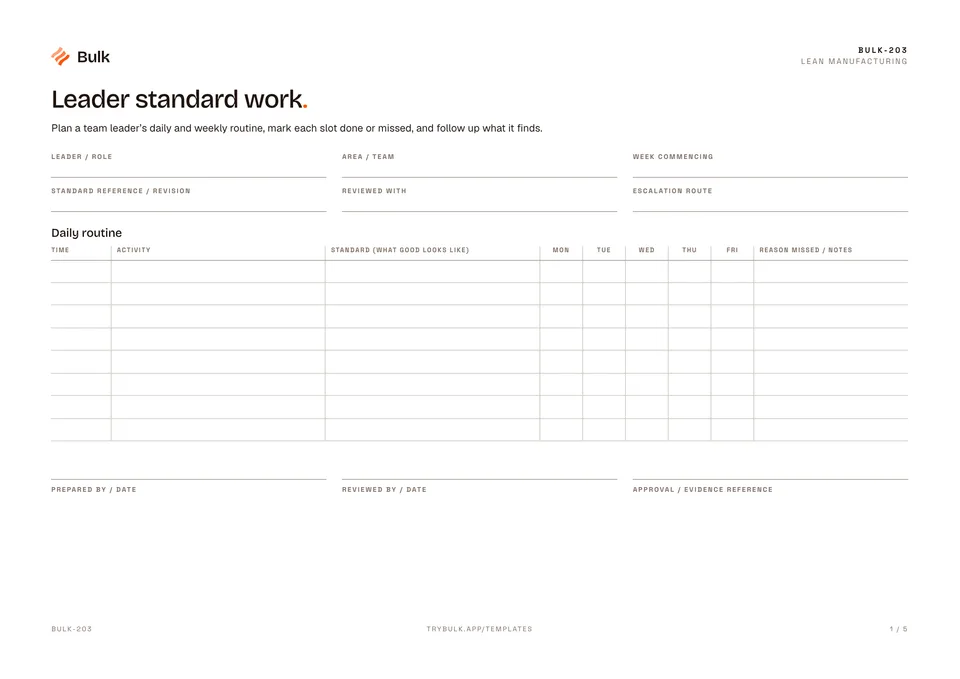
 Leader Standard Work TemplatePlan a team leader's daily and weekly routine, mark each slot done or missed, and follow up what it finds.
SQDCP Board Template
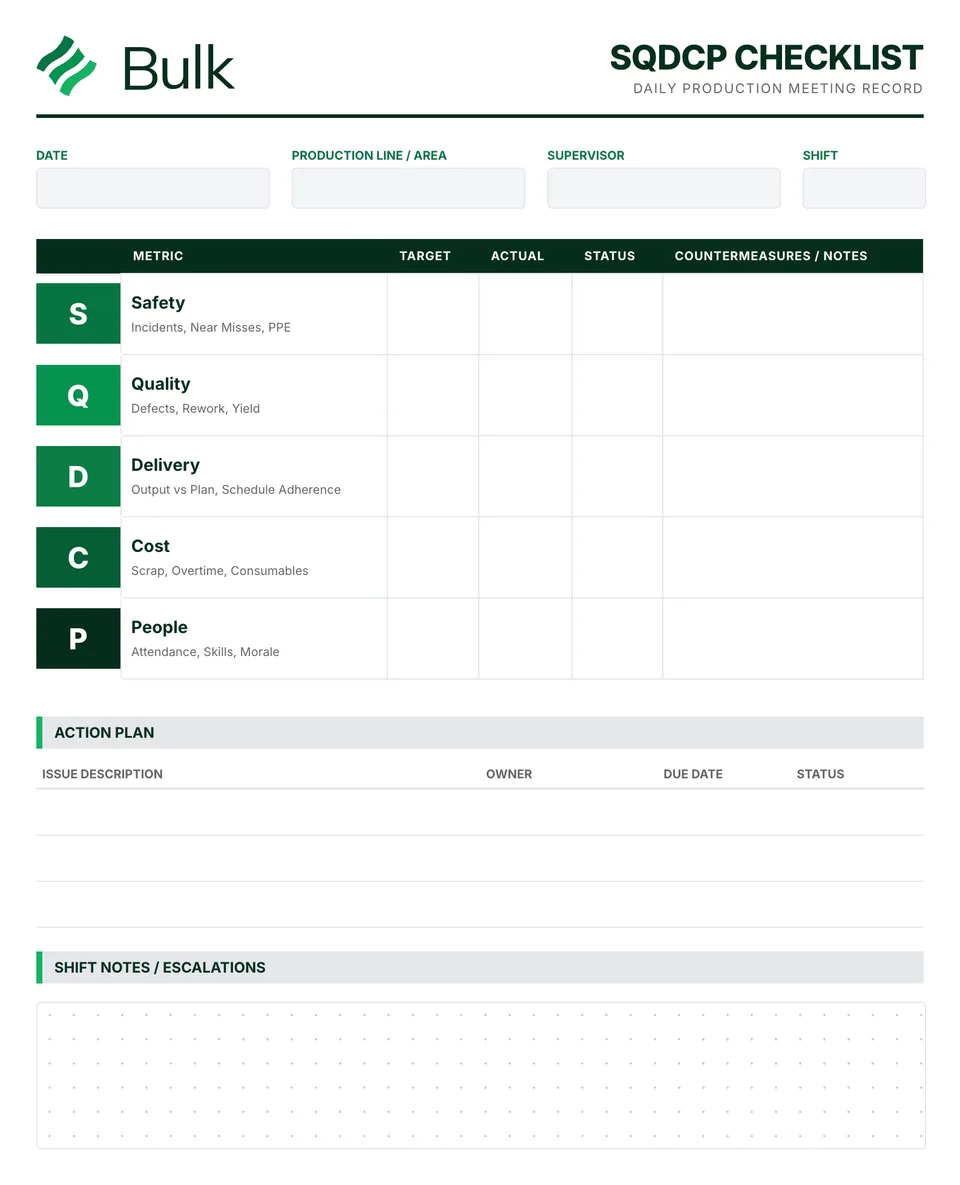
Define a target and an actual measure for Safety, Quality, Delivery, Cost and People.
What it's for
Use this SQDCP daily meeting checklist to keep the working record, its evidence and follow-up together. Define a target and an actual measure for Safety, Quality, Delivery, Cost and People. Use the same reporting period for each comparison.
SQDCP or SQCDP?
SQDCP and SQCDP use the same five letters; only the order of Delivery and Cost changes. Typical SQCDP examples are days without a recordable injury for Safety, scrap or first-pass yield for Quality, output against plan for Delivery, overtime or scrap cost for Cost, and attendance or training completed for People. Choose one measure per letter, show it on the board and use this SQDCP template to run the meeting against it. When the same miss keeps returning, rank its causes on a Pareto chart.
What you can download
The PDF contains the original blank form, followed by a completed fictional example and a separate instructions page. Print only the blank pages for use at work; keep the example and guide as references. The download is free; enter your email to receive a secure link valid for seven days. Product-news consent is optional.
Completed manufacturing example
The daily review records a missed output target and excess scrap, then assigns the sensor and burr investigations to named owners. Today’s actual is added at shift end.
Yesterday’s delivery gap is 190 - 200 = -10. A met target does not mean every related risk is closed; the near-miss action remains visible.
When to use this template
The checklist supports the meeting. It is not a live performance dashboard and does not define universal KPI targets.
Continue with Daily Production Log, Shift Handover Report, Pareto chart.
For shared records, evidence and follow-up, explore Bulk boards. Start a free trial to run it live, no card needed.
How to use it
- Define a target and an actual measure for Safety, Quality, Delivery, Cost and People. Use the same reporting period for each comparison.
- Review exceptions and name the supporting job, incident or quality record. Keep the meeting focused on decisions and escalation.
- Assign each action one owner and due date. Check previous actions at the next meeting and update today's production actual only when the shift is complete.
Key features
- Structured SQDCP review sections
- Visual performance boards and metrics tracking
- Yesterday's production plan and priorities
- Issue identification and escalation process
- Action item tracking with ownership
- Completed fictional example and instructions
Ideal for
- Lean facilitators implementing tier meeting systems
- Operations managers driving accountability and alignment
- Manufacturing teams practicing visual management
Common uses
- Running a daily production meeting
- Reviewing target misses with evidence
- Escalating actions to the next tier
Questions, answered.
01
What does SQDCP stand for?
Safety, Quality, Delivery, Cost and People. SQCDP is the same set with Cost and Delivery in the other order; both are used for daily tier meetings and visual boards in lean manufacturing.
02
What is an SQDCP board?
A visual board, usually at the line, that shows each letter's target and actual for the day or month, often with a red or green status and a list of open actions. The daily meeting reviews the misses and assigns owners.
03
What are some SQCDP examples of metrics?
Safety: near misses reported or days without a recordable injury. Quality: scrap or first-pass yield. Delivery: output against plan. Cost: overtime hours or scrap cost. People: attendance or training completed. Choose measures the team can influence.
04
How long should an SQDCP meeting take?
Tier 1 meetings commonly run for 10 to 15 minutes, standing at the board. Keep to exceptions and actions, and escalate anything the team cannot resolve to the next tier.
Related templates.
Leader Standard Work TemplatePlan a team leader's daily and weekly routine, mark each slot done or missed, and follow up what it finds.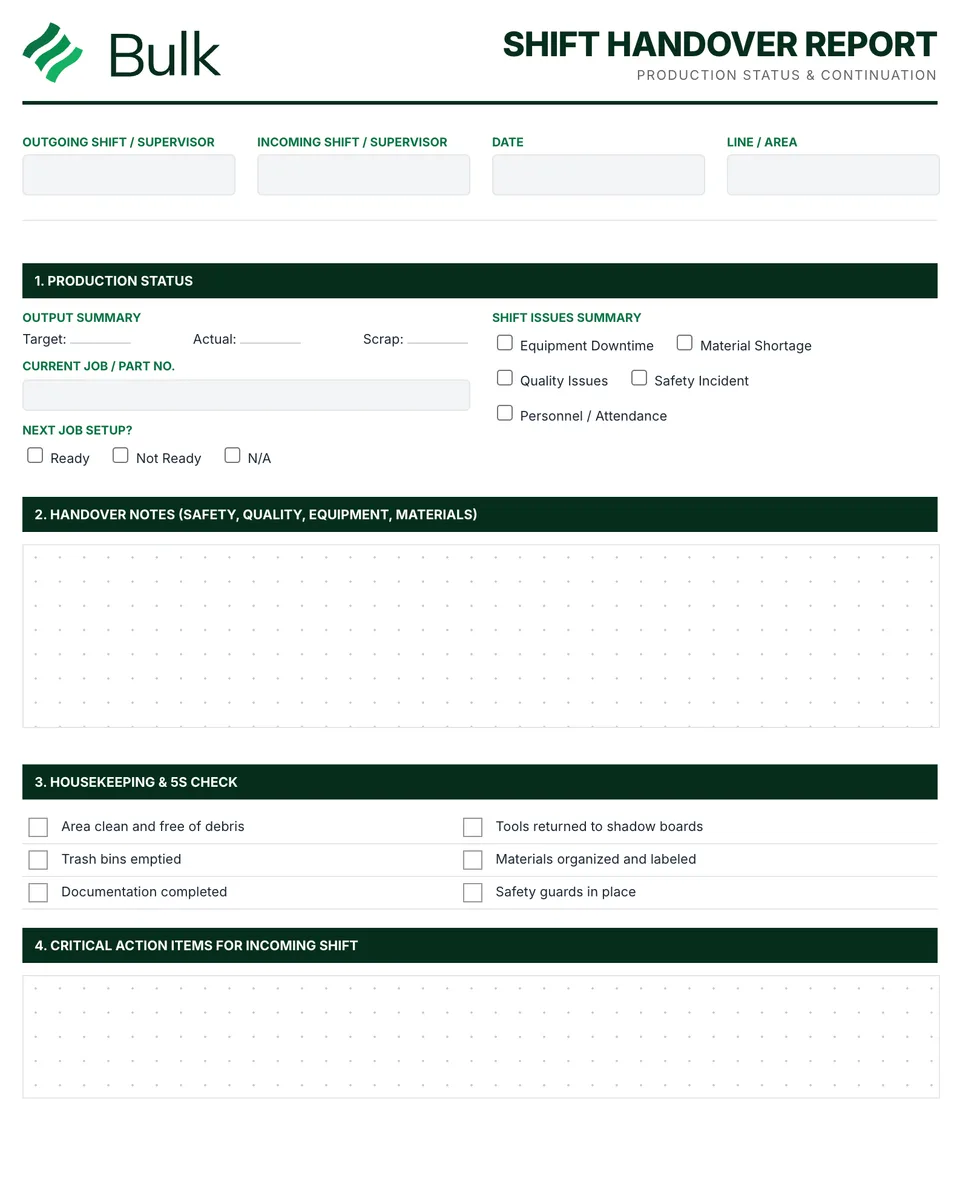 Shift Handover TemplateConfirm the outgoing and incoming supervisors, area, current job and next job.
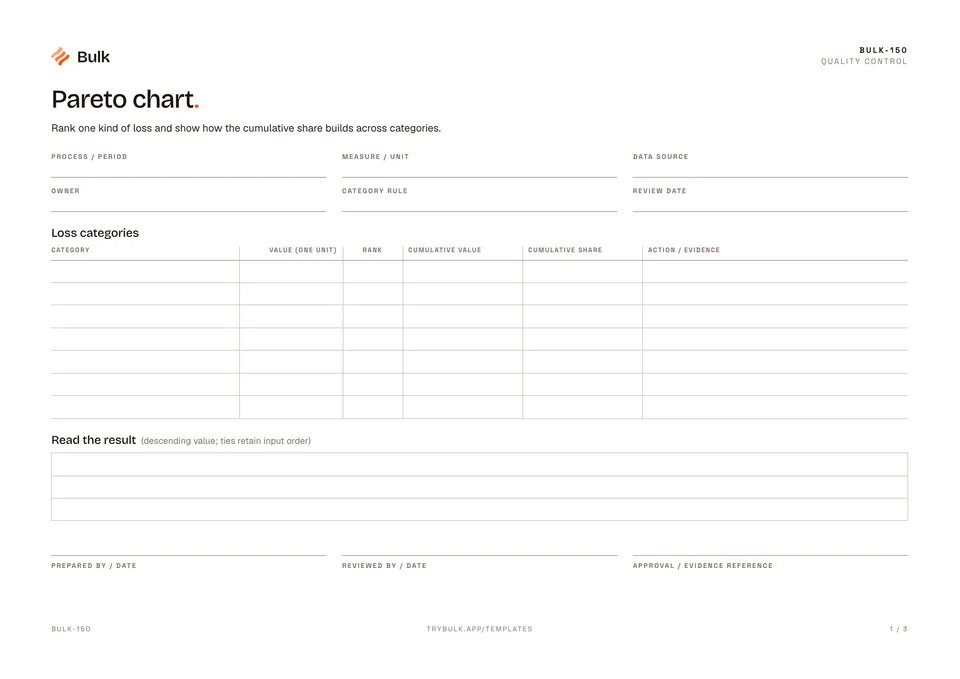 Pareto chartRank one kind of loss and show how the cumulative share builds across categories.
Turn the form into a live workflow.
Bulk connects the same checks, evidence, owners and approvals to the work happening on your floor.