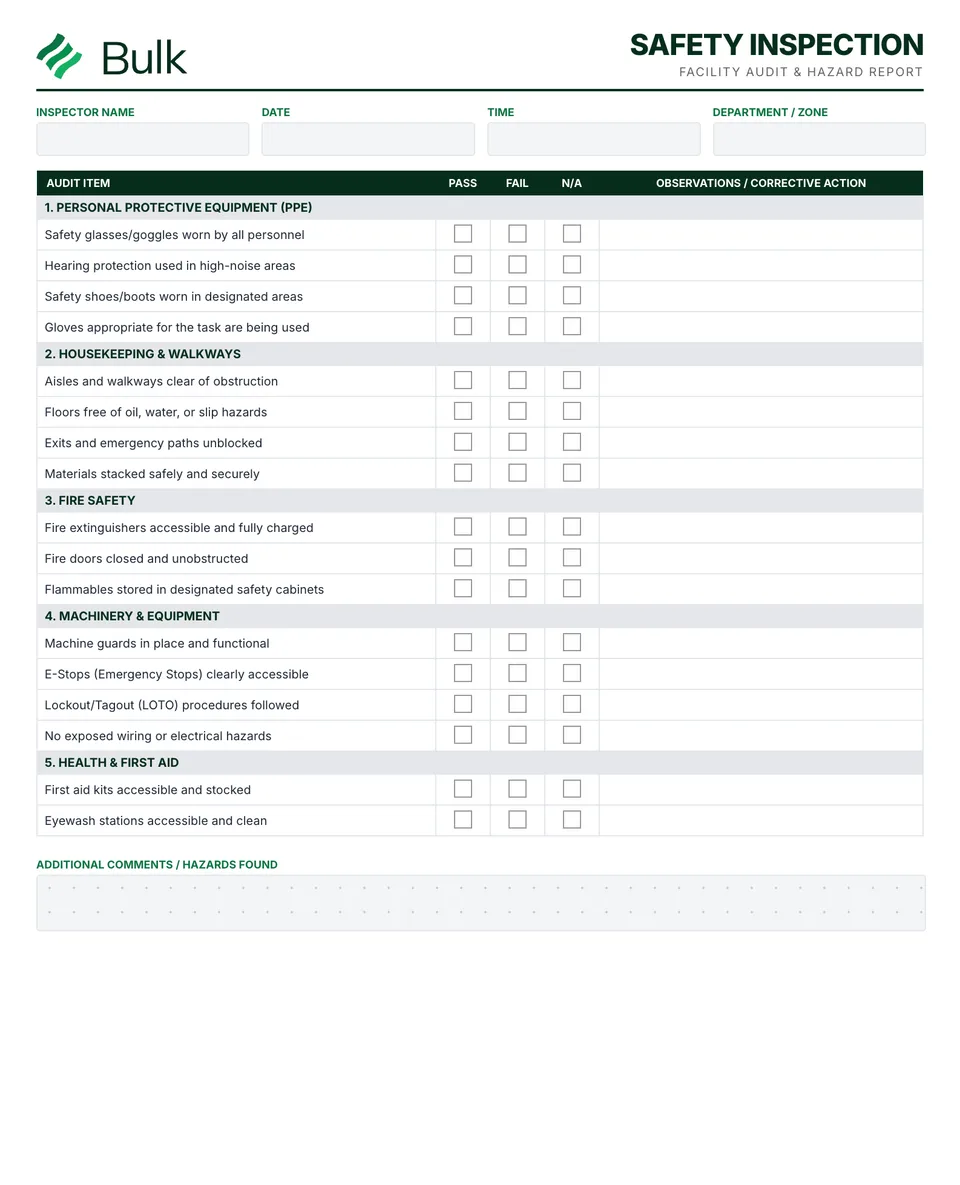
 Safety Inspection FormDefine the area, scope and applicable checks with the responsible people.
Ladder inspection checklist
Inspect a portable ladder before its first use each shift, tag out any defect and log the result.
What it's for
Inspect a portable ladder before its first use each shift, tag out any defect and log the result. This free ladder inspection checklist records one portable ladder’s pre-use check, what happened if it failed, and a shift log for every ladder on the site.
What you can download
Available files: PDF. Each PDF includes the blank form first, a fictional completed example and instructions. The download is free; enter your email to receive a secure link valid for seven days. Product-news consent is optional.
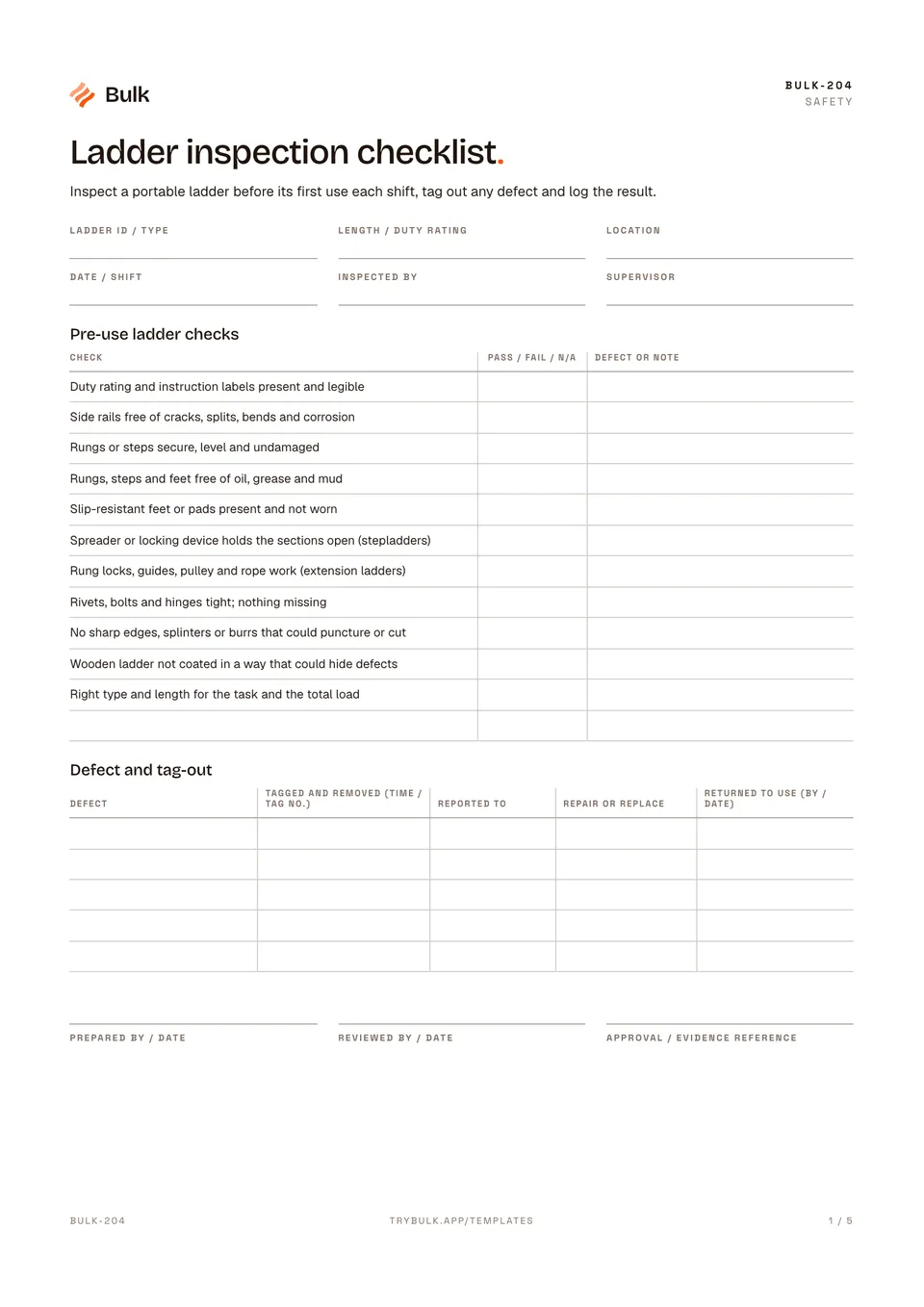
The blank ladder inspection checklist is two A4 pages. The header records the ladder ID and type, its length and duty rating, its location, the date and shift, who inspected it and the supervisor. Page one lists eleven pre-use checks, each marked pass, fail or N/A with a note: labels and duty rating; side rails; rungs or steps; slippery contamination; slip-resistant feet; stepladder spreaders or locks; extension ladder rung locks, guides, pulley and rope; rivets, bolts and hinges; sharp edges and splinters; coatings on wooden ladders; and whether the ladder suits the task and load. A defect and tag-out table records the tag number, who was told, and whether the ladder was repaired or replaced. Page two is a shift inspection log for several ladders and a box for notes to the supervisor.
What OSHA requires for ladder inspection
OSHA’s walking-working surfaces rule for general industry, 29 CFR 1910.23, sets the two requirements this form is built around:
- Before each shift. Ladders are inspected before initial use in each work shift, and more frequently as necessary, to identify any visible defects that could cause employee injury (1910.23(b)(9)).
- Defects tagged out. Any ladder with structural or other defects is immediately tagged “Dangerous: Do Not Use” or with similar language and removed from service until it is repaired or replaced (1910.23(b)(10)).
The same section also covers how a ladder is built and used. Wooden ladders must not be coated with anything that may hide structural defects, ladder surfaces must be free of puncture and laceration hazards, and stepladders need a metal spreader or locking device that holds them open. Ladders are not loaded beyond their maximum intended load, which includes the person and everything they carry. Other jurisdictions have their own rules.
Before you climb
Inspection is the first half; set-up is the second. Under 1910.23(c), use a portable ladder only on a stable, level surface unless it is secured; open a stepladder fully with the spreader locked; do not stand on the cap or top step of a stepladder; make an access ladder extend at least 3 feet above the upper landing; and secure or barricade a ladder in a doorway, passageway or driveway. Face the ladder and keep at least one hand on it when climbing (1910.23(b)(11) and (b)(12)).
How to complete the checklist
- Record the ladder, its length and duty rating, the location, the date and shift.
- Work through the eleven checks against the ladder’s labels and the manufacturer’s instructions.
- Mark each check pass, fail or N/A. Give the reason for an N/A, for example “stepladder” against the extension ladder check.
- If any check fails, stop. Tag the ladder out, remove it from use and record the tag number, the time and who you told.
- Record whether the ladder will be repaired or replaced, and who returns it to use.
- Add the result to the shift inspection log on page two.
Completed manufacturing example
In the fictional example, a fibreglass stepladder in the maintenance store is inspected at the start of the day shift. Nine checks pass, two are N/A because it is a fibreglass stepladder, and one fails: a crack about four inches long in the rear right side rail. The inspector tags it “Dangerous: Do Not Use” at 06:40, moves it to the quarantine rack and tells the supervisor. The ladder is not repairable, so it is destroyed and a replacement is issued.
The shift log on page two shows the same stepladder passing the previous day, then failing, with the replacement checked and issued. The supervisor’s note links the crack to a near miss the night before, when the ladder fell from its wall bracket, and records that the bracket was refitted.
Common ladder inspection mistakes
- Inspecting once a week. The requirement is before first use each shift, not on a weekly round.
- Putting a damaged ladder back on the rack. Without a tag and removal, the next person will use it.
- Painting a wooden ladder. Paint hides cracks; OSHA does not allow coatings that may obscure defects.
- Ignoring a fall or knock. A ladder that has been dropped or struck needs another look before use.
When to use this template
Use it for stepladders, extension ladders and other portable ladders used in plants, warehouses and workshops. It is a pre-use inspection record. It does not certify compliance with OSHA 29 CFR 1910.23 or any other rule; adapt it to your ladders, the manufacturer’s instructions and your site procedure.
Continue with the safety inspection form for a wider area walk, the risk assessment form for work at height, or the incident report form for a fall or near miss.
In Bulk, pre-use checks run as audits, corrective actions become tasks in the plant’s Safety project, and a near miss is reported as an incident with its own investigation. Explore Bulk safety and start a free trial to run it live, no card needed.
How to use it
- Inspect each portable ladder before its first use in each work shift, and more often when needed, for visible defects that could cause injury. Check it again after it falls, is dropped or is struck.
- Work through the checks against the ladder's labels and the manufacturer's instructions. Mark pass, fail or N/A, and give the reason for an N/A.
- If any check fails, do not use the ladder. Tag it "Dangerous: Do Not Use" or similar wording and remove it from service until it is repaired or replaced.
- Log each ladder's shift checks on the second sheet so repeat defects and missed checks show.
Key features
- Pre-use checks for one portable ladder
- Pass, fail or N/A with a defect note
- Defect and tag-out record
- Shift inspection log for several ladders
- Notes for the supervisor
Ideal for
- Maintenance, facilities and production staff who use portable ladders
- Supervisors who keep the site's ladders in service and tag out defective ones
Common uses
- Recording the pre-use inspection of a stepladder or extension ladder
- Tagging out and tracking a defective ladder until it is repaired or replaced
- Keeping a shift log of ladder checks across a site
Questions, answered.
01
How often should ladders be inspected?
OSHA's general industry rule requires ladders to be inspected before initial use in each work shift, and more often as necessary, to find visible defects that could cause injury (29 CFR 1910.23(b)(9)). Inspect again after a ladder falls, is dropped or is struck.
02
What should you check on a ladder before use?
The labels and duty rating; side rails for cracks, splits, bends and corrosion; rungs or steps for damage and slippery contamination; slip-resistant feet; the spreader or locks on a stepladder; rung locks, pulley and rope on an extension ladder; loose or missing fixings; sharp edges or splinters; and that the ladder suits the task and the total load.
03
What do you do with a damaged ladder?
Stop using it straight away. OSHA requires a ladder with structural or other defects to be tagged "Dangerous: Do Not Use" or with similar language and removed from service until it is repaired or replaced (1910.23(b)(10)). Record the defect, the tag number and who was told.
04
Does this checklist cover fixed ladders?
No. It is for portable ladders such as stepladders and extension ladders. Fixed ladders have their own requirements in 1910.23(d) and fall protection rules in 1910.28 and 1910.29.
Related templates.
Safety Inspection FormDefine the area, scope and applicable checks with the responsible people.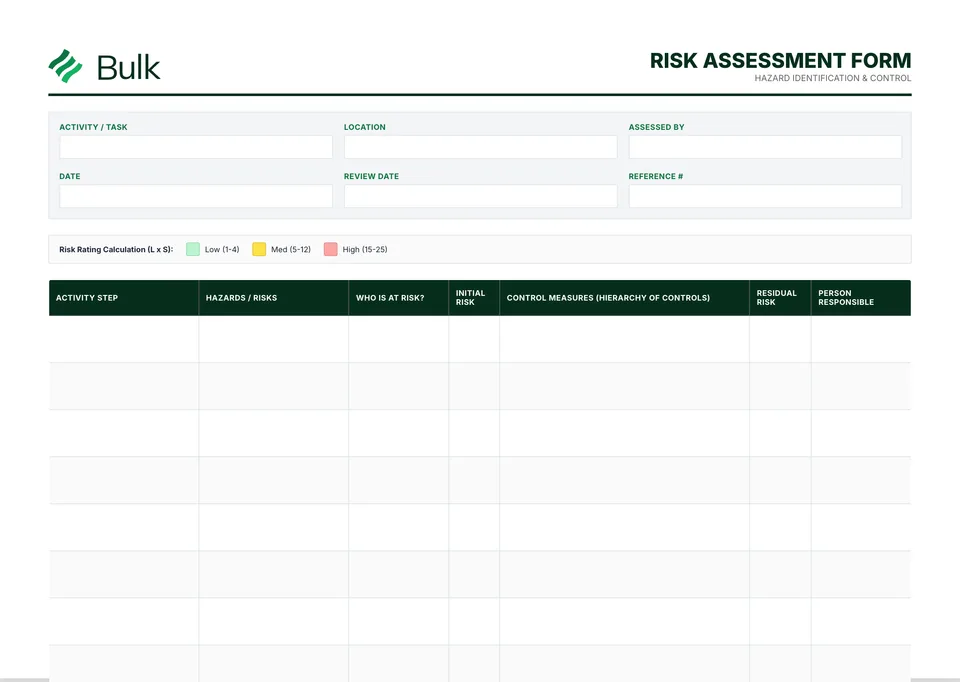 Risk Assessment FormObserve the task with the people doing it, identify each hazard and who may be harmed, and use the site's agreed risk-rating definitions.
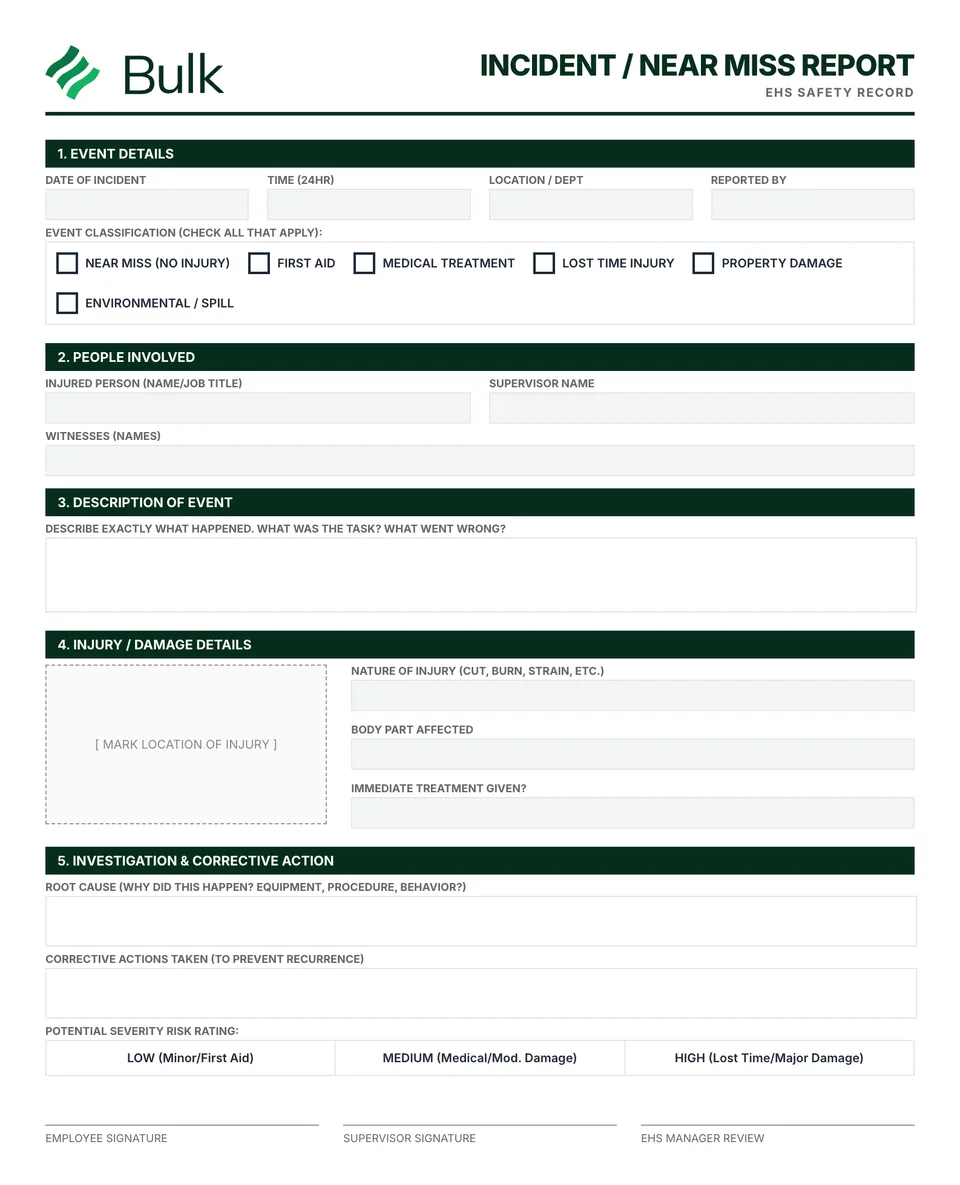 Incident Report FormFollow the emergency response process first.
Turn the form into a live workflow.
Bulk connects the same checks, evidence, owners and approvals to the work happening on your floor.