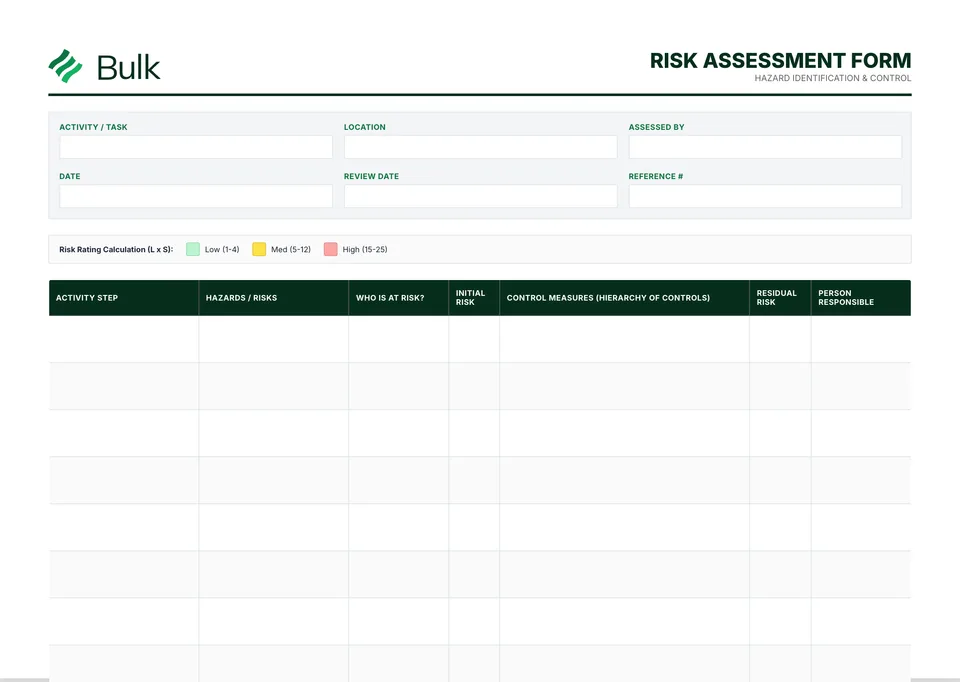
 Risk Assessment FormObserve the task with the people doing it, identify each hazard and who may be harmed, and use the site's agreed risk-rating definitions.
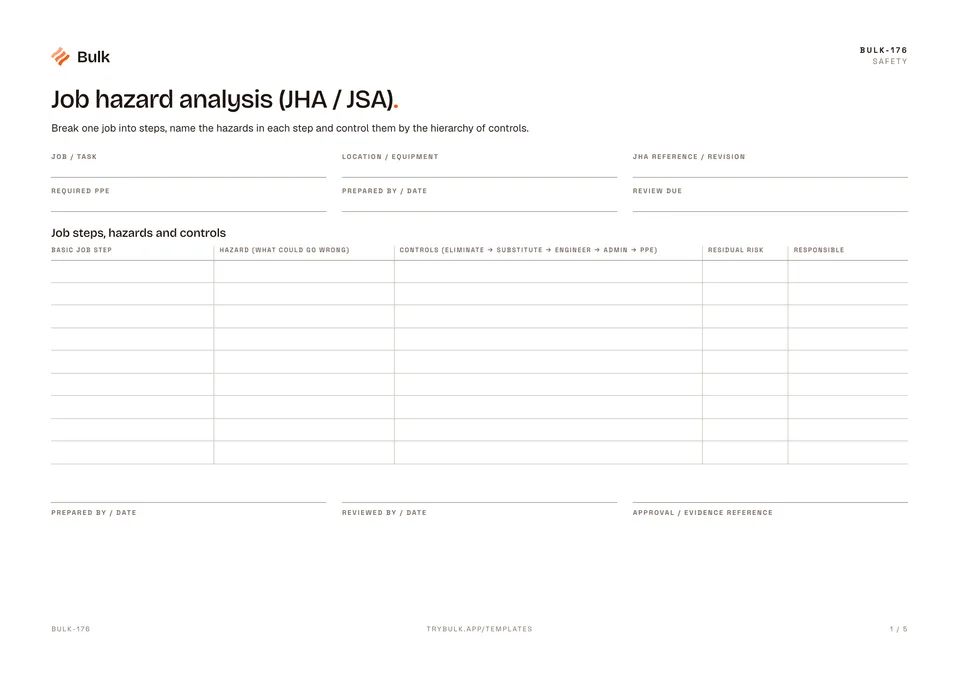
Job hazard analysis (JHA / JSA)
Break one job into steps, name the hazards in each step and control them by the hierarchy of controls.
What it's for
Break one job into steps, name the hazards in each step and control them by the hierarchy of controls.
What you can download
Available files: PDF. Each PDF includes the blank form first, a fictional completed example and instructions. The download is free; enter your email to receive a secure link valid for seven days. Product-news consent is optional.
Completed manufacturing example
A setter’s job of changing press-brake tooling is broken into five steps: isolate the machine, remove the upper punch sections, lift the die from the bed, fit and clamp the new tooling, then remove the locks and make a trial bend. Each step names what could go wrong, from unexpected ram movement to a 24 kg manual-handling lift and trapped fingers in the clamps.
Controls are listed in hierarchy order, starting with lockout and zero-energy testing and ending with gloves and boots, and each step carries a residual risk and a responsible person. One further control is still needed because the tool trolley does not match the bed height, so a request is raised with an owner and date. Two setters are briefed and sign.
When to use this template
Use it for jobs with the highest injury history or potential, non-routine tasks such as set-ups, cleaning and maintenance, and any job that has changed. It is a working analysis to adapt to your site: it supports, and does not replace, a competent risk assessment or the legal duties that apply to your workplace.
Score hazards across an activity or area with the risk assessment form, put isolation steps in the lockout/tagout procedure and check the workplace with the safety inspection form.
In Bulk, risk assessments score each hazard before and after its control measures on a 5x5 matrix, go through approval and can require signed acknowledgement from named people. Explore Bulk safety and start a free trial to run it live, no card needed.
How to use it
- Choose jobs with the highest injury history or potential first. Involve the people who do the job and watch it being done.
- List the basic steps in order, in a few words each. Too much detail hides the hazards; too little misses them.
- For each step, ask what could go wrong: contact, caught-in, falls, strain, energy release, exposure. Then control each hazard by the hierarchy: eliminate, substitute, engineering controls, administrative controls, and PPE last.
- Brief everyone who does the job, record their signatures, and review the analysis after an incident, a near miss or any change to the job or equipment.
- Use the risk assessment form to score hazards across an activity or area; the JHA follows one job step by step. Isolation steps belong in the lockout/tagout procedure.
Key features
- Job steps, hazards and controls
- Further controls and review
- Workers briefed
Ideal for
- Supervisors and safety leads analysing one job with the people who do it
- Maintenance and set-up teams planning non-routine tasks
Common uses
- Breaking a set-up, maintenance or cleaning job into steps and hazards
- Choosing controls in hierarchy order before the job starts
- Briefing the workers who do the job and recording their sign-off
Questions, answered.
01
What is the difference between a JSA and a JHA?
Nothing in practice. Job safety analysis (JSA) and job hazard analysis (JHA) both break a job into steps, identify the hazards in each step and set controls. Organisations use either name.
02
How do you write a job hazard analysis?
Watch the job with the people who do it, list the basic steps in order, ask what could go wrong at each step, then set controls in hierarchy order: eliminate, substitute, engineering controls, administrative controls and PPE last. Brief the workers and review it after any incident or change.
03
What is the difference between a JHA and a risk assessment?
A JHA follows one job step by step. A risk assessment scores the hazards of an activity or area by likelihood and severity. Many sites use both.
04
When should a job hazard analysis be reviewed?
After an incident or near miss, when the job, equipment or materials change, and at a regular interval your site sets. Isolation steps belong in the lockout/tagout procedure.
Related templates.
Risk Assessment FormObserve the task with the people doing it, identify each hazard and who may be harmed, and use the site's agreed risk-rating definitions.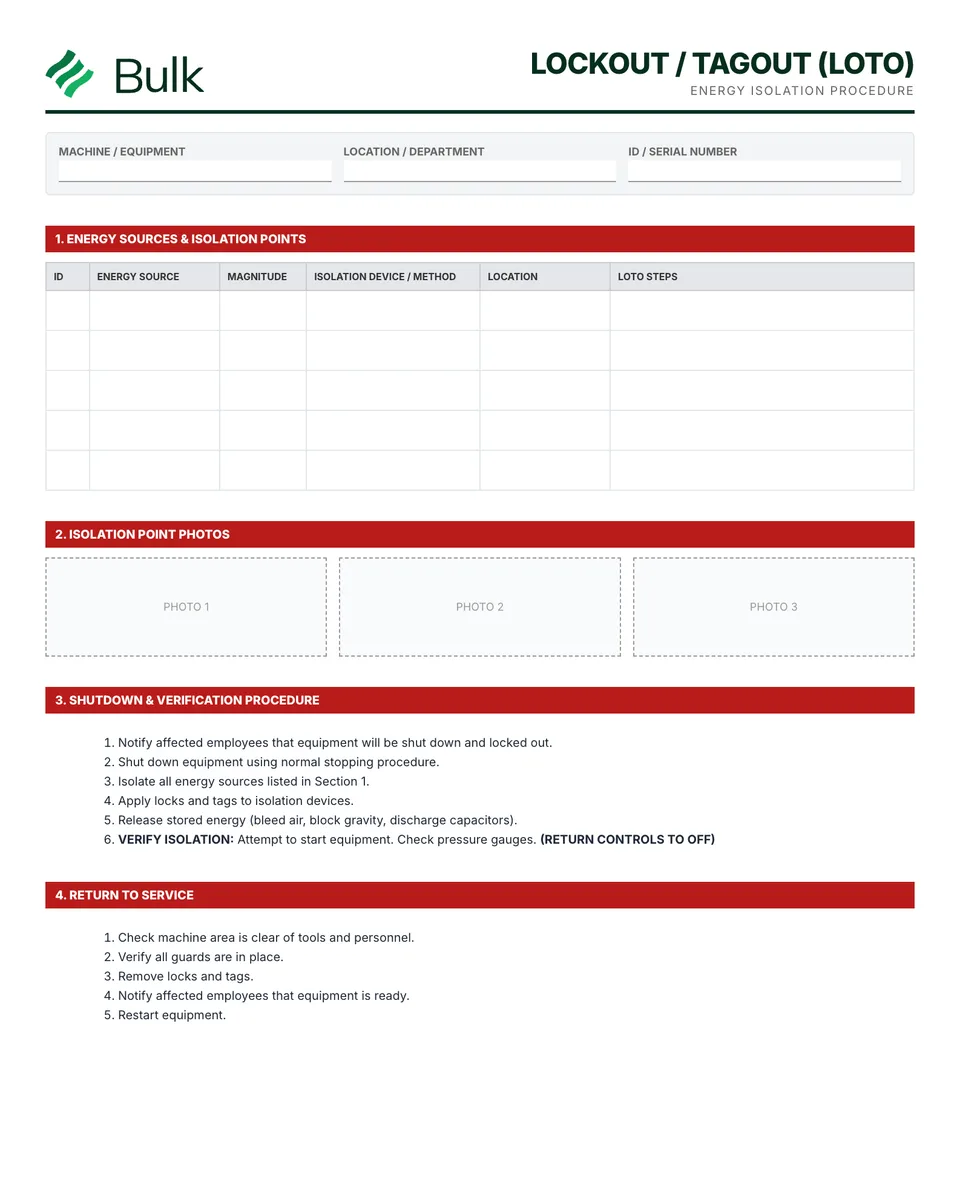 Lockout/Tagout Procedure (LOTO)Identify every hazardous energy source and the machine-specific procedure, including stored or residual energy.
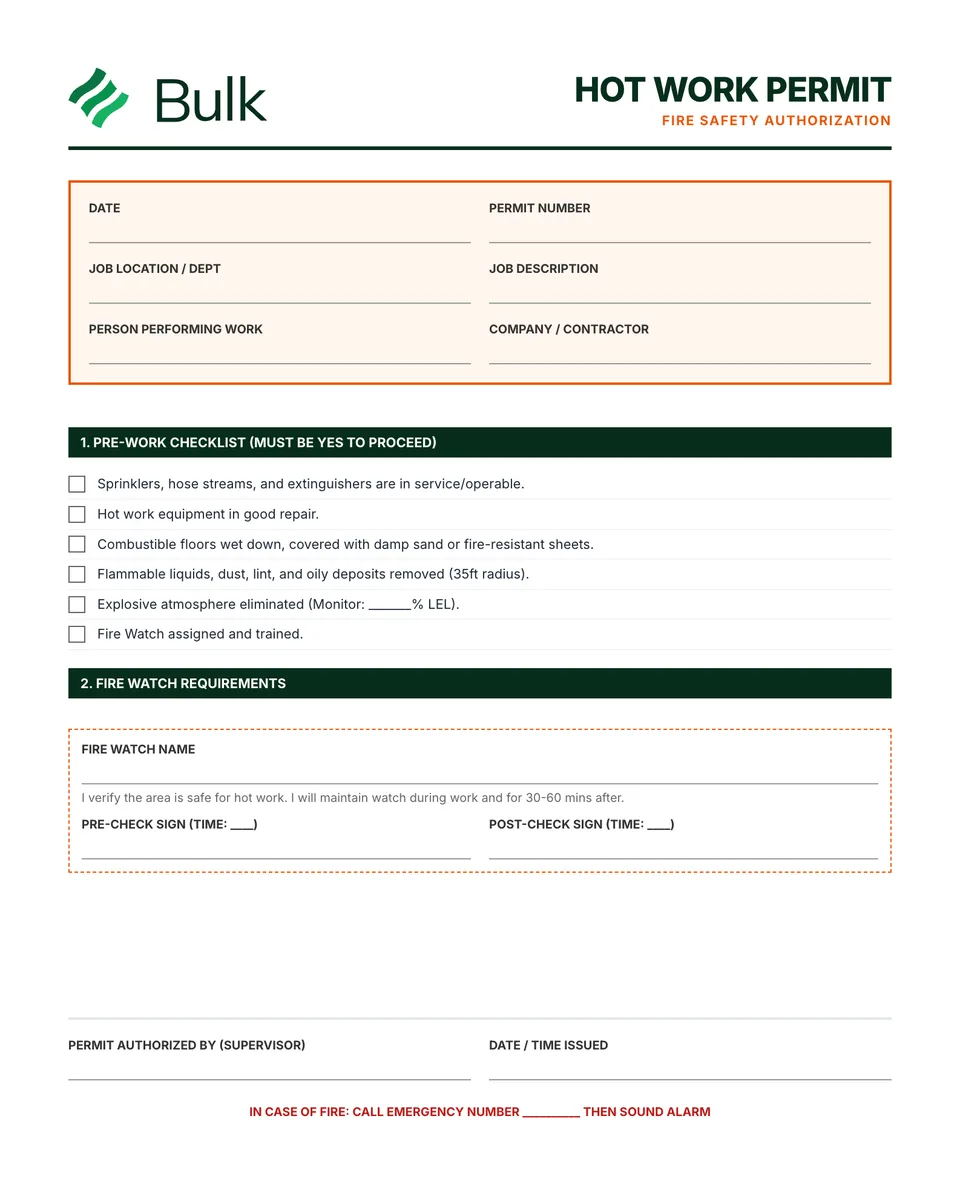 Hot Work PermitIdentify the job, location and proposed method, and consider whether the work can be moved or completed without hot work.
Turn the form into a live workflow.
Bulk connects the same checks, evidence, owners and approvals to the work happening on your floor.